Optimize for AI Overviews Powerful Strategies 2026
Google AI Overviews now appear on roughly 15% of all searches and that number keeps climbing. If your content isn’t structured to get cited, you’re handing visibility to competitors who figured out the formula first.
The good news: optimizing for AI Overviews isn’t mysterious. Research shows that 52% of AI Overview sources already rank in Google’s top 10 organic results. Strong traditional SEO still matters, but it’s not enough on its own. You also need content that’s structured, specific, and authoritative in the way AI systems prefer.
This guide covers exactly how to optimize for AI Overviews in 2026 from how they work, to content strategies, structured data, statistics usage, and measuring your results.
How Google AI Overviews Work
AI Overviews (formerly Search Generative Experience or SGE) sit at the top of Google’s search results page and synthesize information from multiple sources into a single AI-generated answer. Google pulls content from pages it considers authoritative, well-structured, and directly relevant to the query.
They don’t appear for every search. Google tends to trigger AI Overviews for:
- Informational queries with clear educational intent
- Complex questions that benefit from synthesized answers
- How-to and step-by-step searches
- Comparison queries (e.g., “X vs Y”)
- Definition and explanation searches
They’re far less common for transactional queries, local searches, or highly sensitive topics like medical diagnoses and legal advice.
What Google Pulls Into an AI Overview
Google doesn’t randomly select sources. It prioritizes pages that:
- Rank in the top 10 organic results for the query
- Contain clear, structured answers near the top of the page
- Come from sites with strong E-E-A-T signals
- Include specific data points, statistics, or quotable statements
- Use proper heading hierarchy and logical content flow
Understanding this selection logic is the foundation of every optimization strategy that follows.
How to Optimize for AI Overviews
1. Rank in the Top 10 First
This is the single most important factor. According to multiple industry studies, around 52% of pages cited in AI Overviews already rank on page one of Google for that query. You can’t skip traditional SEO and go straight to AI visibility, the two are deeply connected.
Focus on:
- Building topical authority through content clusters
- Earning high-quality backlinks from relevant domains
- Meeting Core Web Vitals thresholds (especially LCP under 2.5 seconds)
- Maintaining strong on-page SEO fundamentals
If your page doesn’t rank on page one, your chances of appearing in an AI Overview for that query are slim.
2. Structure Content with Answer-First Writing
Google AI Overviews pull from content that directly answers questions, not content that circles around them for three paragraphs first.
Use the inverted pyramid structure: lead with the most important information, then expand with supporting detail. For example, if someone searches “what is topical authority,” your page should open with a clear one-to-two sentence definition before anything else.
Practical structure to follow:
- Open each section with a direct answer or definition
- Follow with supporting explanation, examples, or data
- Use H2 and H3 headings that mirror real search queries
- Keep paragraphs to 2-4 sentences
3. Add Specific Statistics and Data Points
Research from Princeton and other institutions studying AI citation patterns consistently shows that content containing specific statistics, quantified claims, and verifiable data gets cited at significantly higher rates than general commentary.
Instead of writing “many businesses use content marketing,” write “70% of B2B marketers actively use content marketing as a core channel (Content Marketing Institute, 2025).”
Every factual section of your content should include:
- Percentages and numeric data points
- Named studies or research sources
- Specific dates and timeframes
- Measurable outcomes from real examples
This specificity signals to both Google’s quality systems and its AI Overview algorithm that your content is authoritative and trustworthy.
4. Use Quotable, Extractable Statements
Google’s AI Overview system frequently pulls short, quotable passages from pages often one to three sentences that directly answer a question. Think of these as “AI snippets” within your content.
Write deliberate, standalone sentences that could be lifted from your content and still make complete sense. These work best when they:
- Start with the key claim or answer
- Include a specific detail or number
- Are 20-40 words long
- Appear near the top of a section, under a clear heading
This technique comes directly from studying how Princeton researchers described AI citation behavior: AI systems favor content that is “self-contained, factually dense, and clearly attributed.”
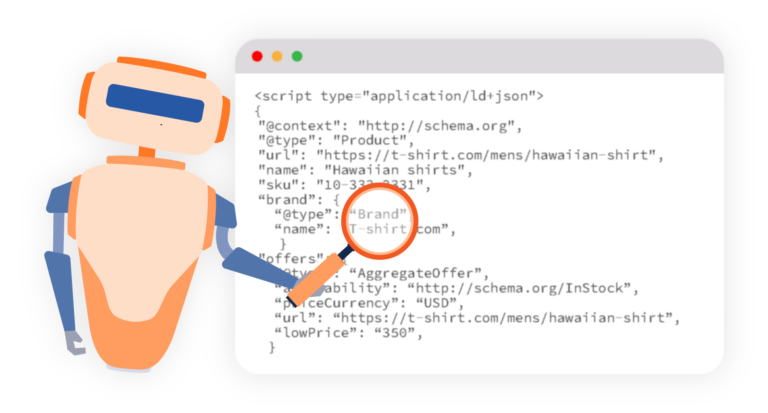
5. Implement Structured Data (Schema Markup)
Schema markup helps Google parse your content more accurately and more accurately parsed content is more easily cited. For AI Overview optimization, prioritize:
| Schema Type | Why It Helps |
|---|---|
| FAQPage | Directly answers common questions AI Overviews target |
| HowTo | Step-by-step structure Google favors for instructional queries |
| Article | Establishes content type, date, and authorship clearly |
| Organization | Builds brand entity recognition |
| BreadcrumbList | Helps Google understand your site structure |
FAQPage schema is especially powerful. It maps directly to the question-and-answer format that are used to optimize for AI Overviews. Mark up 5-10 genuine questions on each key page.
For implementation, follow Google’s official structured data guidelines.
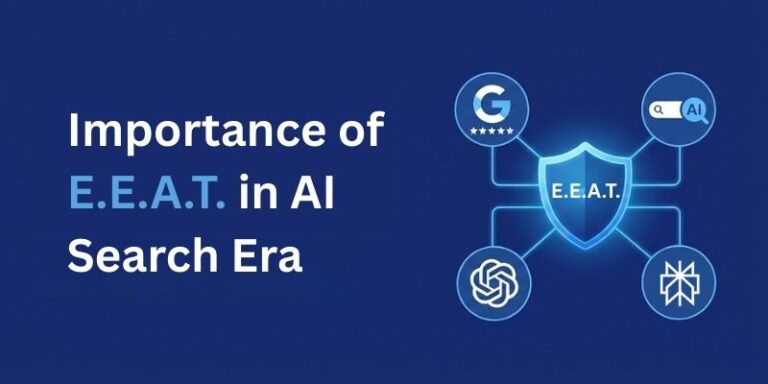
6. Build E-E-A-T Signals Across Your Site
Google’s AI Overview system heavily weights Experience, Expertise, Authoritativeness, and Trustworthiness. A well-structured page on a low-authority domain rarely gets cited.
E-E-A-T signals to build:
- Author bylines with verifiable credentials and bio pages
- About pages that clearly describe your organization’s expertise
- Citations and links to primary research sources within your content
- Editorial review processes (mention them where relevant)
- Consistent brand mentions across authoritative third-party sites
For agencies, demonstrating real client outcomes even anonymized case studies adds the “Experience” dimension that Google increasingly values over generic expertise claims.
7. Target AI Overview-Friendly Query Types
Not all content has equal AI Overview potential. Focus your optimization effort on pages targeting:
- “How to” and “how does” queries
- “What is” and definition searches
- “Best practices for” queries
- “X vs Y” comparison content
- Step-by-step guide content
- Statistical roundups and research summaries
These formats align naturally with what AI Overviews are designed to answer. Creating content clusters around these query types rather than one-off articles builds the topical authority Google needs to trust your site as a citation source.
Structured Content Requirements for Google AI Search Results
Beyond writing strategy, your pages need to meet specific technical and structural standards to be consistently cited in AI search results.
Heading Hierarchy
Use a clean H1 > H2 > H3 structure without skipping levels. Each heading should describe what follows not tease, not be clever, just describe. AI systems parse headings as navigation signals when extracting relevant sections.
Paragraph Length and Density
Keep paragraphs short. Two to four sentences is ideal. Dense walls of text are harder for AI systems to parse and extract from reliably.
Internal Linking and Topical Depth
Pages that exist within a well-developed content cluster signal topical authority more strongly than isolated articles. Link logically between related content on your site. If you’re writing about to optimize for AI Overviews, link to your content on generative engine optimization, structured data implementation, and Google Search Console tracking.
Mobile and Speed Performance
AI Overviews pull from pages that Google has already assessed as high-quality. That assessment includes Core Web Vitals. Run your key pages through Google PageSpeed Insights and resolve any critical issues before expecting to optimize for AI Overviews.
Measuring Your AI Overview Visibility
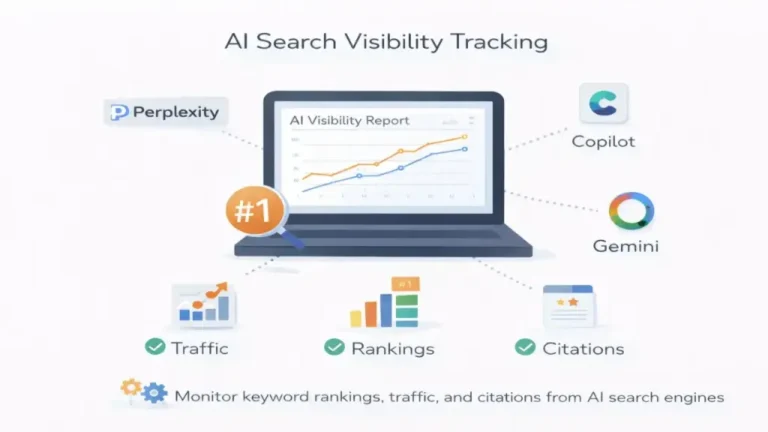
You can’t optimize what you can’t measure. Tracking AI Overview performance requires a combination of tools and manual testing.
Google Search Console
Search Console now includes AI Overview impression data in some markets. Check your Performance report for queries where your pages appear as AI Overview sources. Look for:
- Queries with high impressions but lower click-through rates (AI Overviews often reduce clicks even when you’re cited)
- Pages appearing as AI Overview sources for queries you’re already ranking for
- New query opportunities where AI Overviews appear but you’re not yet cited
Manual SERP Testing
Search for your target queries in an incognito browser and record whether to optimize for AI Overviews, whether your content is cited, and how competitors are referenced. Do this monthly for your top 20-30 target queries.
Third-Party Tools
Several tools now track AI Overview visibility:
- Semrush tracks AI Overview appearances in SERP feature data
- Ahrefs includes AI Overview presence in keyword data
- SERPstat monitors SERP feature changes over time
- Ziptie / Otterly.ai purpose-built for generative search tracking
Combine Search Console data with manual testing and at least one third-party tool for the most complete picture. Ahrefs’ guide to tracking AI Overviews is a useful reference for setting up systematic monitoring.
Frequently Asked Questions
What percentage of Google searches show AI Overviews?
AI Overviews currently appear on approximately 13-15% of all Google searches, though this varies significantly by query type and geography. Informational and how-to queries trigger them most frequently. Google continues to optimize for AI Overviews coverage, so this percentage is expected to increase through 2026.
Does ranking in the top 10 guarantee an AI Overview citation?
No, but it makes it significantly more likely. Research indicates around 52% of AI Overview citations come from top-10 ranking pages. You also need well-structured, answer-first content and strong E-E-A-T signals. Ranking alone isn’t enough if your content doesn’t match the format AI systems prefer to cite.
Does schema markup directly improve AI Overview appearances?
Schema markup doesn’t guarantee an AI Overview citation, but it helps Google understand and parse your content more accurately. FAQPage and HowTo schema types align especially well with AI Overview query patterns. Think of schema as reducing friction between your content and Google’s extraction process, it won’t create citations where none would otherwise exist, but it removes barriers.
How is optimizing for AI Overviews different from featured snippet optimization?
They share significant overlap both favor answer-first content, clear structure, and authoritative sources. The key differences: AI Overviews synthesize from multiple sources simultaneously rather than pulling a single snippet, they favor more comprehensive content, and they’re more influenced by overall domain authority and E-E-A-T than featured snippets alone. Optimizing for featured snippets is a solid foundation to optimize for AI Overviews.
Will appearing in AI Overviews reduce my organic traffic?
Potentially, yes. Studies show that AI Overview citations sometimes reduce click-through rates for the cited pages because users get their answer without clicking through. However, brand visibility and authority signals from being cited still provide indirect value. The best strategy is to optimize for AI Overview citations while also ensuring your content gives users compelling reasons to click through for deeper information.
Can newer or lower-authority sites appear in AI Overviews?
It’s uncommon but not impossible. Google has cited pages from smaller sites when the content is exceptionally well-structured, highly specific, and matches a query that larger sites haven’t covered well. Targeting low-competition, specific informational queries gives newer sites the best opportunity. Building topical authority within a defined niche is more effective than trying to compete broadly.
How often should I update content to maintain AI Overview citations?
For fast-moving topics, update every 3-6 months. For evergreen content, an annual refresh is typically sufficient. Google’s AI systems favor current, accurate information particularly for statistics-heavy content. When you update, add new data points, refresh any statistics, and expand thin sections. Mark the update date clearly on the page.
Key Takeaways
Optimizing for AI Overviews in 2026 comes down to a combination of strong fundamentals and AI-specific content strategies. Here’s what to action first:
- Prioritize top-10 rankings AI Overview citations follow organic rankings closely
- Write answer-first content with direct, quotable statements near the top of each section
- Add specific statistics and data vague content rarely gets cited
- Implement FAQPage and HowTo schema on your most important pages
- Build E-E-A-T signals through author credentials, external mentions, and verifiable expertise
- Track your AI Overview visibility monthly using Search Console and Semrush
AI search is changing how users interact with Google results. Brands that adapt their content strategy now will be significantly better positioned as to optimize for AI Overviews through 2026 and beyond.
Ready to build an AI-ready content strategy? Explore 7thClub’s white label SEO services or get in touch to discuss how we can help your brand earn more AI search visibility.