
AI Search Optimization Best Practices for 2026
Search is changing faster than most marketers realize. AI search optimization is no longer a future trend, it’s a present-day requirement. Gartner predicts a 25% decline in traditional search volume by 2026, driven by the rapid adoption of AI-powered answer engines. If your content strategy still revolves entirely around blue links and SERP rankings, you’re already falling behind.
ChatGPT crossed 100 million users in two months. Perplexity now handles over 100 million queries per month. Google’s AI Overviews appear in roughly 47% of all searches. The way people find information has fundamentally changed and the way you optimize for visibility needs to change with it.
This guide breaks down everything you need to know: the difference between SEO, AEO, and GEO, how the major AI engines actually decide what to surface, and a step-by-step implementation roadmap you can start using this week.
How Search Has Evolved: From Keywords to AI
For most of the internet’s history, SEO meant one thing: get Google to show your page when someone types a query. The playbook was straightforward, research keywords, build backlinks, optimize page speed, and publish content that matched search intent. That model worked well for two decades.
Then large language models arrived, and everything changed.
The numbers tell the story clearly. According to BrightEdge research, 51% of companies report that AI Overviews are already impacting their organic traffic. A SparkToro study found that roughly 60% of Google searches now end without a click. And according to Salesforce’s 2025 Connected Shoppers report, AI-assisted search is growing at three times the rate of traditional search among 18-34 year olds.
The old model of ranking #1 for a keyword still matters. But it’s no longer sufficient on its own. Users are increasingly getting answers directly from AI systems without ever clicking through to a website. If your brand isn’t being cited, referenced, or surfaced by those AI systems, you’re invisible to a growing portion of your audience.
This is the core challenge and opportunity of AI search optimization in 2026.
SEO vs. AEO vs. GEO: What’s the Difference?

These three acronyms get thrown around interchangeably, but they describe distinct optimization strategies with different goals, mechanics, and measurement approaches. Understanding the difference is the first step toward a coherent strategy.
Search Engine Optimization (SEO)
SEO is the practice of optimizing web content to rank in traditional search engine results pages (SERPs). The focus is on signals like backlink authority, keyword relevance, technical health (Core Web Vitals, crawlability, indexation), and content depth. Google remains the dominant platform, with Bing a distant second.
SEO is not dead, far from it. Organic search still drives more traffic than any other channel for most websites. But it now needs to work alongside AEO and GEO, not in isolation.
Answer Engine Optimization (AEO)
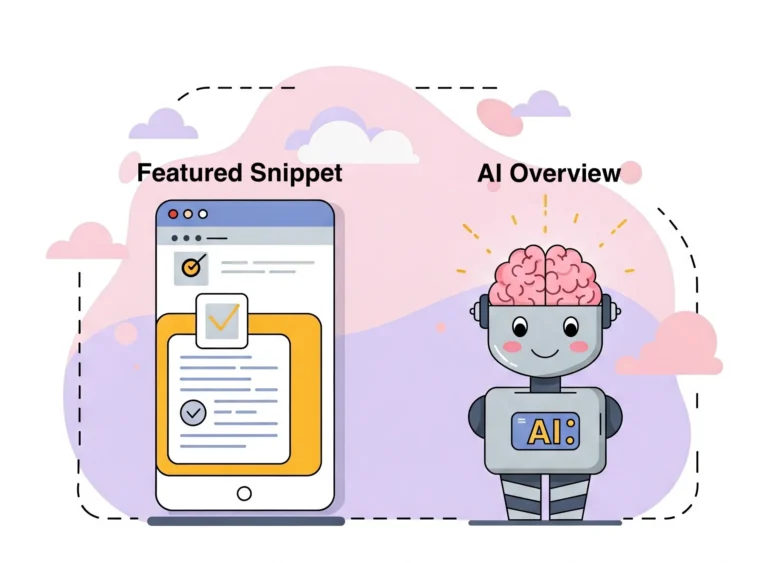
Answer engine optimization focuses on winning featured snippets, voice search results, and AI Overview inclusions. The target isn’t just a ranking, it’s being selected as the direct answer to a specific question. AEO requires structuring content in concise Q&A formats, using FAQ schema markup, and addressing queries with precise, authoritative responses.
If someone asks Google “what is topical authority?” and your site’s definition appears in the AI Overview box, that’s AEO working. The click rate may be lower, but the brand impression is significant.
Generative Engine Optimization (GEO)
Generative engine optimization is the newest of the three, focused specifically on getting content cited, referenced, or surfaced by LLM-based platforms like ChatGPT, Perplexity, Google Gemini, and Anthropic’s Claude. GEO is less about ranking and more about entity authority becoming a recognized, trustworthy source in your niche that AI systems pull from when generating responses.
GEO strategies include building topical depth across content clusters, earning high-quality editorial backlinks, publishing original research, and ensuring your brand is consistently mentioned by reputable third-party sources.
SEO vs. AEO vs. GEO
| Dimension | SEO | AEO | GEO |
|---|---|---|---|
| Primary Goal | Rank in SERPs | Win answer boxes | Be cited by AI engines |
| Target Platform | Google, Bing | Voice, featured snippets | ChatGPT, Perplexity, Gemini |
| Key Signal | Backlinks, keywords | Structured Q&A | Entity authority, citations |
| Measurement | Rankings, traffic | SERP feature wins | AI citation frequency |
| Content Format | Long-form articles | Concise Q&A | Authoritative, cited content |
How AI Engines Work

To optimize for these platforms, you need to understand how they actually work. Each has a different architecture and, as a result, different content signals it responds to.
Google AI Overviews
Google’s AI Overviews use a Retrieval-Augmented Generation (RAG) approach. Google retrieves relevant web pages using its existing index, then uses a large language model to synthesize a summary response. This means traditional SEO signals, authority, relevance, freshness still influence which pages get pulled into AI Overviews.
The key insight: if you’re already ranking in the top 10 for a query, you have a much higher chance of being included in the AI Overview. But highly structured, citable content especially with clear definitions, stats, and organized sections, gets pulled in more frequently, even from pages ranked 5th to 15th.
ChatGPT and OpenAI’s Web Browsing
ChatGPT’s base model draws on its training data, which has a knowledge cutoff. However, ChatGPT Plus users can activate web browsing (powered by Bing), which lets the model retrieve and cite current sources. For your content to be cited here, it needs to be indexed by Bing and carry strong authority signals E-E-A-T markers, original data, and clear authorship.
Perplexity AI
Perplexity operates almost entirely on real-time web retrieval. It searches the web for each query, pulls from multiple sources, and synthesizes a cited answer. This makes it arguably the most SEO-adjacent of the AI search tools like Perplexity actually shows citations and links, so being cited directly increases referral traffic.
Perplexity tends to favor sources with clear, concise information on specific topics, strong domain authority, and direct answers to factual queries. Niche expertise and topical depth pay off disproportionately here.
Claude (Anthropic)
Claude’s approach varies by access method. Claude.ai’s web-enabled mode retrieves current information similarly to ChatGPT’s browse mode, while API-based Claude deployments work from training data. For GEO purposes, building broad entity recognition being frequently mentioned in high-authority publications is the primary lever for Anthropic’s models.
E-E-A-T in the Age of AI
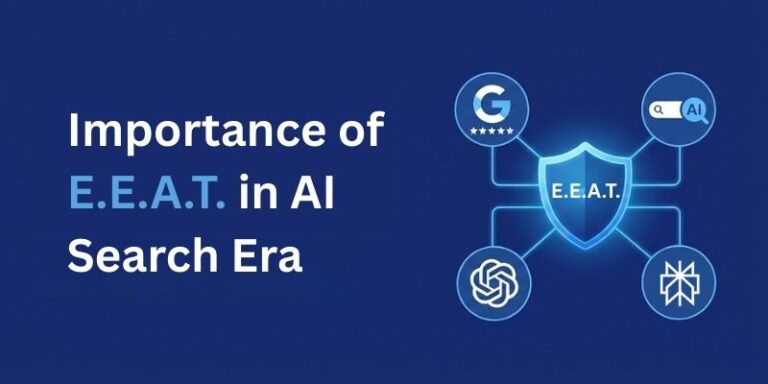
Experience, Expertise, Authoritativeness, and Trustworthiness Google’s E-E-A-T framework was originally designed for human quality raters evaluating search results. In 2026, it’s also the foundation of AI search optimization.
AI systems are trained on the web, and they’ve absorbed web-scale signals about which sources are authoritative and reliable. Content from sources that consistently demonstrate E-E-A-T gets weighted more heavily in both training data and retrieval.
How to Signal E-E-A-T to AI Systems
- Author bios with verifiable credentials: Name the expert behind the content. Include LinkedIn profiles, publication history, and domain-specific qualifications.
- First-hand experience: Include original data, case studies, test results, or direct observations. AI systems and Google’s quality raters both respond to genuine experience signals.
- Editorial citations: When reputable publications, industry blogs, or academic sources reference your content, that’s a trust signal that carries weight in both traditional SEO and AI training data.
- Consistent brand mentions: Being referenced by name across multiple authoritative sites even without a direct backlink builds entity authority that AI models recognize.
- Accurate, verifiable claims: Cite your sources. Use data from recognizable studies. Avoid exaggerations. AI models are increasingly capable of cross-referencing claims, and inaccuracies hurt credibility.
One area where agencies often underinvest: Digital PR. Earning coverage in industry publications, trade media, and news outlets is one of the most effective ways to build the kind of entity authority that gets you cited by AI systems. A well-placed article in Search Engine Journal or a mention in a Moz study does more for your GEO footprint than ten generic guest posts.
The Hybrid Optimization Framework
The most effective approach in 2026 isn’t to choose between SEO, AEO, and GEO, it’s to build a content strategy that serves all three simultaneously. Here’s how that works in practice.
1: Traditional SEO Foundation
Start with the basics, because they still matter. Ensure your technical SEO is solid: crawlability, mobile-first performance, Core Web Vitals, and proper schema markup implementation. Build topical authority through content clusters, interconnected articles covering every major angle of your core topics. This depth signals expertise to both Google’s algorithm and the training data AI models draw from.
- Conduct thorough keyword research across informational, commercial, and navigational intents
- Build content clusters with strong internal linking not just standalone articles
- Implement structured data (FAQ, HowTo, Article, Organization schema) across your site
- Earn editorial backlinks through digital PR, original research, and thought leadership
2: AEO for Answer Box Dominance
Identify the questions your audience asks most frequently. Write clear, direct answers to each in the first 2-3 sentences of the relevant section. Use FAQ schema markup to help Google identify question-and-answer pairs. Format definitions as self-contained, quotable sentences that could stand alone in an AI Overview.
- Structure H2 and H3 headings as questions where appropriate
- Answer each question in the first sentence of the section don’t build up to the answer
- Use FAQ schema on every page with a Q&A section
- Keep answers between 40-60 words for optimal featured snippet inclusion
3: GEO for AI Citation Authority
GEO requires building genuine authority that AI systems recognize and trust. This means creating original research and data that others want to cite, earning mentions in authoritative industry publications, and ensuring your brand and key personnel are consistently recognized as subject matter experts.
- Publish original studies, surveys, or data that give other writers something to cite
- Target brand mentions in high-authority publications links help, but unlinked mentions count too
- Create comprehensive resource pages that AI systems treat as reference material
- Use clear, citable statistics and factual statements that AI can pull cleanly
Implementation Roadmap
Here’s a phased approach to implementing AI search optimization for an existing website. Adjust timelines based on your team size and current site authority.
Phase 1: Audit (Weeks 1-2)
Assess your current position across all three optimization layers. Use Google Search Console to identify your top-performing content, then check whether those pages appear in AI Overviews using manual queries. Run a content gap analysis using Ahrefs or SEMrush to find high-intent questions you’re not currently answering. Check your schema markup coverage with Google’s Rich Results Test.
Phase 2: Foundation (Weeks 3-6)
Add detailed author bios with credentials to all content. Implement FAQ schema on your top 20 pages. Restructure existing articles so answers appear in the first paragraph of each section. Create or update your About page with clear organizational authority signals: awards, press mentions, years in operation, team credentials.
Phase 3: Authority Building (Months 2-3)
Launch a targeted digital PR campaign to earn brand mentions and editorial links in relevant publications. Publish at least one piece of original research even a small survey of 100-200 respondents in your niche can generate citations. Develop your content cluster strategy: identify 3-5 core topic areas and build 8-12 interconnected articles around each.
Phase 4: Scale and Measure (Ongoing)
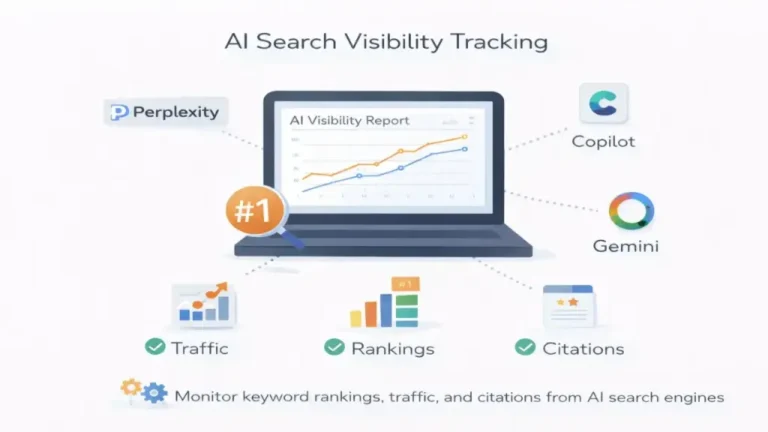
Track AI citation frequency by running branded and unbranded queries in Perplexity, ChatGPT, and Google AI Overviews regularly. Monitor traditional SEO metrics alongside AI visibility metrics. Refine your content based on what’s getting cited, and double down on the formats and topics that AI systems respond to most consistently.
Tools and Resources
You don’t need a new tech stack to execute AI search optimization. Most of the tools you already use for SEO apply here, with some additions.
Research & Analysis
- Ahrefs: Content gap analysis, backlink monitoring, keyword research across all intent types
- SEMrush: Competitor analysis, AI Overview tracking, content audit tools
- Google Search Console: Baseline performance data, impressions, and click data for organic queries
- BrightEdge: Enterprise-level AI Overview visibility tracking
Technical SEO & Schema
- Screaming Frog SEO Spider: Full site audit, schema validation, crawl analysis
- Google Rich Results Test: Validate structured data implementation
- Schema.org: Reference documentation for all markup types
AI Visibility Monitoring
- Perplexity AI: Manual citation checking; run branded and topical queries weekly
- ChatGPT / Microsoft Copilot: Test how AI describes your brand and expertise areas
- Wincher / AccuRanker: AI Overview rank tracking for monitored keywords
Common Mistakes to Avoid
Most sites that struggle with AI visibility are making one of these errors:
- Optimizing for keywords alone, not entities. AI systems recognize concepts and authorities, not just keyword matches. Build your content around topics and entities, not just terms.
- Publishing thin content clusters. Having 50 articles in a cluster means nothing if each one is 400 words and covers the surface level. Depth and genuine expertise are what AI systems treat as authoritative.
- Ignoring structured data. FAQ schema, Article schema, and Organization schema are among the most direct signals you can give to both Google’s AI systems and third-party AI tools. Not using them is leaving citations on the table.
- No author attribution. Anonymous content has weaker E-E-A-T signals. Every piece of content should be associated with a named expert with verifiable credentials.
- Treating GEO as separate from SEO. The best GEO signals authoritative backlinks, entity mentions, topical depth are also the best SEO signals. Build them together, not in parallel silos.
FAQs
What is AI search optimization?
AI search optimization is the practice of making your content visible and citable across AI-powered search tools including Google AI Overviews, ChatGPT, Perplexity, and similar platforms in addition to traditional search engines. It combines SEO, AEO, and GEO strategies into a unified approach to maximize visibility across both traditional and AI-generated search results.
Is traditional SEO still worth investing in?
Yes. Traditional SEO remains the foundation of organic visibility, and most AI search tools pull from the same indexed web that Google uses. Strong SEO signals authority backlinks, technical health, topical depth directly support AI visibility. The difference in 2026 is that SEO alone is no longer sufficient for maximum reach across all search platforms.
What is generative engine optimization (GEO)?
Generative engine optimization is the process of optimizing content to be cited and surfaced by large language model-based platforms like ChatGPT, Perplexity, and Google’s Gemini. It focuses on entity authority, citation earning, original research, and building brand recognition across authoritative third-party sources. Unlike traditional SEO, GEO prioritizes being referenced over being ranked.
How do I know if my content is appearing in AI Overviews?
The most reliable method is manual checking, run your target queries directly in Google and note whether your content appears in the AI Overview section. Tools like BrightEdge, SEMrush, and Ahrefs have also started tracking AI Overview presence at scale. Note that AI Overview appearances are personalized and query-dependent, so test across multiple devices and locations.
How long does it take to see results from GEO strategies?
Sites with strong E-E-A-T signals and existing authority can see AI citation improvements within 4-8 weeks of implementing structured data and content optimization. Building entity authority through digital PR and original research typically takes 3-6 months to generate consistent AI visibility improvements. Perplexity citations often come fastest, since it retrieves and cites sources in real time.
What schema markup matters most for AI search?
FAQ schema and Article schema are the highest-impact starting points for most sites. FAQ schema helps AI systems identify question-and-answer pairs for direct inclusion in AI Overviews. Organization schema and Person schema build entity authority signals. HowTo schema works well for procedural content. Start with FAQ schema on your top 20 pages for the fastest visible impact.
Does Perplexity use traditional SEO signals?
Partially. Perplexity retrieves content in real time using web search, so traditional signals like domain authority, indexation, and content relevance all influence which sources get pulled. However, Perplexity also weights content clarity, citation quality, and the directness of answers. Concise, well-sourced content on specific topics tends to perform well even from mid-authority domains.
How does E-E-A-T affect AI search visibility?
E-E-A-T directly influences AI search in two ways: first, it affects which pages Google’s RAG system selects for AI Overviews; second, it shapes the training data that AI models learn authority signals from. Demonstrating real expertise through author credentials, original research, and third-party brand mentions strengthens both traditional SEO and AI visibility simultaneously.
Wrap Up
AI search optimization isn’t a replacement for what you’re already doing, it’s an evolution of it. Here’s the short version of everything covered in this guide:
- Traditional SEO remains essential, but AI Overviews and answer engines now capture a growing share of search traffic, requiring dedicated AEO and GEO strategies alongside it.
- SEO, AEO, and GEO address different platforms and signals but they reinforce each other when built as an integrated hybrid strategy.
- E-E-A-T signals author credentials, original research, editorial citations are the foundation of AI visibility across all platforms.
- Structured data (particularly FAQ and Article schema) is one of the fastest levers for increasing AI Overview and answer box inclusion.
- GEO is a long game built on genuine authority: original data, digital PR, and consistent topical depth across content clusters.
If you’re an agency managing client SEO programs, or a business trying to make sense of where to invest in 2026, the next step is an audit. Understand your current AI visibility baseline, identify your content gaps, and start building the entity authority that AI systems recognize.
At 7thClub.com, we specialize in white label SEO and digital marketing strategies that incorporate everything from technical SEO foundations to GEO-focused content programs. Whether you’re looking to scale your agency’s AI search capabilities or build a comprehensive content strategy for your own brand, get in touch with our team to discuss a custom strategy.