Get Cited in ChatGPT Powerful Ways to Win Visibility 2026
Millions of people now ask ChatGPT for product recommendations, service comparisons, and expert advice and they trust the answers they get. If your brand isn’t being cited in those responses, you’re losing ground to competitors who figured this out first.
Getting cited in ChatGPT isn’t about gaming an algorithm. It’s about becoming a genuinely authoritative, well-documented source that large language models actually trust. This guide breaks down exactly how to get your brand cited in ChatGPT from how the model retrieves information, to content strategies, authority building, structured data, and tracking your AI visibility over time.
How ChatGPT Actually Retrieves and Cites Information
Before optimizing anything, you need to understand what you’re optimizing for.
ChatGPT is built on large language models (LLMs) trained on massive datasets scraped from the web. Unlike Google, which crawls and indexes pages in real time, base ChatGPT responses draw on patterns baked into the model during training. This means content published before a model’s training cutoff has the highest chance of influencing its responses.
However, ChatGPT also uses Retrieval-Augmented Generation (RAG) when browsing is enabled or when integrated with tools like the Bing plugin. In these cases, it pulls live web content and synthesizes a response similar to how AI Overviews work in Google Search.
What this means practically: your brand needs to appear in both the model’s training data patterns and in current, indexable web content. Neither alone is enough.
What Makes a Source Citable?
LLMs don’t cite randomly. They tend to reference sources that are:
- Frequently mentioned across multiple authoritative domains
- Consistent in terminology brands described using the same language across many sources
- Structured clearly information that’s easy to parse (definitions, lists, comparisons)
- Backed by links from high-authority sites (news outlets, industry publications, Wikipedia)
Think of it as a trust signal stack. The more places your brand is accurately and consistently described, the more likely an LLM is to surface it.
Optimise Your Content for LLM Visibility
Traditional SEO gets you ranking in Google. LLM optimisation sometimes called Generative Engine Optimization (GEO) gets you cited in AI-generated answers. The two overlap but aren’t identical.
Write in Answer-First Format
ChatGPT prefers pulling from content that directly answers questions. Structure your pages so the most important information appears first, without burying it in fluff.
For example, if you’re writing about your white label SEO services, lead with a crisp definition: “White label SEO is a service model where one agency delivers SEO work under another agency’s brand.” That sentence is citable. A paragraph about your company history isn’t.
Use Structured, Scannable Content
LLMs parse text more effectively when it’s well-organized. Use:
- Numbered lists for steps and processes
- Definition-style paragraphs for concepts and terminology
- Clear H2 and H3 headings that describe what follows
- Tables for comparisons and feature breakdowns
Content that’s easy for humans to scan is also easier for AI to extract and synthesize or to get cited in ChatGPT.
Target Long-Tail, Conversational Queries
ChatGPT users ask questions differently from Google users. They use full sentences: “What’s the best white label SEO agency for small businesses?” rather than just “white label SEO agency.”
Create content that matches this conversational style. FAQ sections, Q&A blog posts, and “how-to” guides all map naturally to the way people prompt AI tools.
Build the Authority That Makes You Citable
Content quality alone won’t get you cited. You need the external signals that tell AI models your brand is trustworthy and established.
Earn Mentions Across Authoritative Domains
Getting mentioned on high-authority sites, industry publications, news outlets, niche directories, and well-known blogs directly increases your AI citation probability. This is digital PR applied to LLM visibility to get cited in ChatGPT.
Target placements on sites like Search Engine Journal, Forbes, Business Insider, and niche publications specific to your industry. A single mention on a trusted domain is worth more than dozens on low-authority sites.
Build Consistent Brand Mentions (Unlinked Count Too)
Unlike traditional SEO, which focuses heavily on linked citations, LLMs pay attention to unlinked brand mentions as well. If your brand name appears consistently across the web in relevant contexts, that builds a recognition pattern.
Use tools like Mention.com, Brand24, or Google Alerts to monitor where your brand appears. Ensure the language used around your brand is accurate and consistent, LLMs build context from how you’re described, not just that you’re mentioned.
Get Listed on High-Trust Reference Sources
Wikipedia, Crunchbase, LinkedIn company profiles, and industry databases are frequently included in LLM training data. If your brand doesn’t have a presence on these platforms, it may simply not exist in the model’s reference framework.
Prioritize:
- Wikipedia (if eligible requires notability criteria)
- Crunchbase company profile
- LinkedIn business page (fully completed)
- Industry-specific directories relevant to your niche
- G2, Clutch, or Trustpilot profiles (especially for B2B services)
Implement Structured Data for AI Readability
Schema markup helps search engines understand your content. It also helps AI crawlers extract and organize information more accurately to get cited in ChatGPT.
Key Schema Types to Implement
| Schema Type | Use Case |
|---|---|
| Organization | Brand name, description, URLs, contact info |
| FAQPage | Q&A content for AI extraction |
| HowTo | Step-by-step guides |
| Article | Blog posts and editorial content |
| BreadcrumbList | Site structure and navigation context |
Organization schema is particularly important for ChatGPT brand visibility. It explicitly tells crawlers who you are, what you do, and where to find you exactly what an LLM needs to accurately describe your brand.
Implement FAQPage Schema on Key Pages
FAQ schema boosts your chances of appearing in both Google’s AI Overviews and ChatGPT responses. Mark up questions and answers directly on your most important pages. Use real questions your audience asks, not keyword-stuffed variations.
For implementation guidance, Google’s structured data documentation is the authoritative starting point.
RAG Optimization

When ChatGPT browses the web or integrates with search tools, it uses RAG to pull current information. Optimizing for RAG means your pages need to be indexable, fast, and answer-ready.
Make Your Pages Crawlable by AI Bots
OpenAI’s web crawler is called GPTBot. By default, it can access your site but many sites block it unintentionally through overly restrictive robots.txt files.
Check your robots.txt to confirm GPTBot isn’t blocked:
User-agent: GPTBot
Allow: /
Also verify that Google-Extended (used by Google’s Gemini models) isn’t blocked if you want broad AI visibility.
Optimize for Speed and Clean Rendering
AI crawlers, like search engine bots, struggle with slow-loading or JavaScript-heavy pages. Ensure your key content pages:
- Load in under 3 seconds
- Render critical content server-side (not client-side JavaScript)
- Have clear, parseable HTML structure
Keep Content Fresh and Updated
RAG-based systems prioritize recent content. If your core pages haven’t been updated in 18+ months, refresh them. Add new data points, update statistics, and expand thin sections. Freshness signals matter for both Google rankings and AI retrieval to get cited in ChatGPT.
Track Your Brand’s AI Citation Performance
You can’t improve what you don’t measure. Brand tracking for AI visibility requires a different approach than standard SEO reporting.
Manual Prompt Testing
The most direct method: ask ChatGPT yourself. Test prompts like:
- “What are the best white label SEO agencies?”
- “Which companies offer white label digital marketing?”
- “Who are the top SEO agencies for resellers?”
Log whether your brand appears, how it’s described, and which competitors are cited instead. Do this monthly to track changes over time.
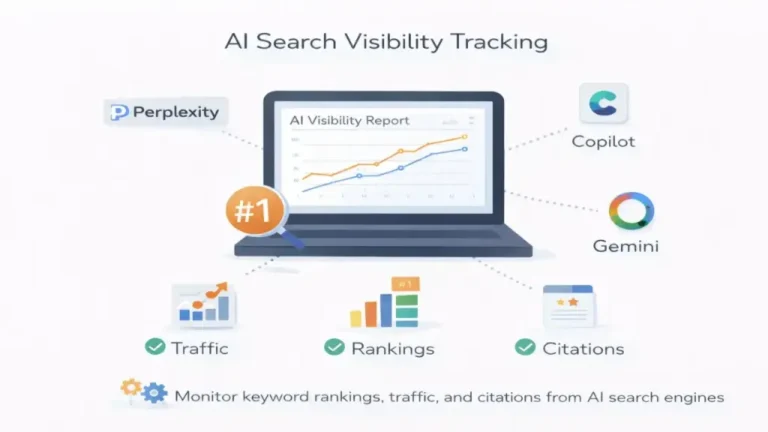
Use AI Visibility Monitoring Tools
Several tools now track brand mentions across AI platforms:
- Brandwatch monitors brand mentions including AI-sourced content
- Semrush’s AI Toolkit tracks visibility in AI Overviews
- Otterly.ai specifically built for LLM visibility tracking
- Profound monitors brand citations across multiple AI tools
These tools are still maturing, but even basic tracking will give you a competitive edge over brands that aren’t measuring this at all.
Monitor Referring Traffic from AI Sources
In Google Analytics 4, watch for referral traffic from ChatGPT.com, Perplexity.ai, and Bing (which powers ChatGPT’s browse mode). An uptick in these referral sources often correlates with increased AI citation frequency.
FAQs
How long does it take to get cited in ChatGPT?
There’s no guaranteed timeline. For ChatGPT’s base model (without browsing), your content needs to be in its training data which updates with new model versions, typically every 12-18 months. For browsing-enabled ChatGPT, the timeline is much faster: once your pages are indexed and authoritative, they can appear in responses within weeks. Focus on long-term authority building rather than quick wins.
Does having a Wikipedia page help with ChatGPT citations?
Yes, significantly. Wikipedia is one of the most heavily weighted sources in LLM training data. If your brand meets Wikipedia’s notability guidelines, a well-maintained page can dramatically increase your AI visibility. Even if you don’t qualify for a full page, getting mentioned in relevant Wikipedia articles helps.
Is ChatGPT SEO different from traditional SEO?
They share foundations, high-quality content, authority signals, structured data but differ in execution. Traditional SEO optimizes for keyword rankings in search results. LLM optimization focuses on being a citable, trustworthy source in AI-generated answers. You need both, and fortunately the best practices for one usually support the other.
Can I pay to get cited in ChatGPT?
No. ChatGPT doesn’t accept paid placements, and OpenAI hasn’t introduced advertising within responses. The only way to get cited is by earning it through genuine authority, quality content, and widespread brand presence across the web.
What types of content get cited most often by AI?
Definitions, statistics, comparisons, how-to guides, and listicles tend to get cited most. These formats are easy for LLMs to extract and synthesize. If your content directly answers clear questions with specific, accurate information, it’s much more likely to be referenced in AI responses.
Does blocking GPTBot hurt my brand’s AI visibility?
Yes. If GPTBot can’t crawl your site, OpenAI can’t include your current content in its retrieval systems. Unless you have a specific reason to block AI crawlers (such as protecting proprietary content), leaving GPTBot access enabled is the safer choice to get cited in ChatGPT.
How important are backlinks for getting cited in ChatGPT?
Backlinks remain important, but not just for Google rankings. High-authority backlinks signal that your brand is recognized by established sources and those same sources are often part of LLM training data. A link from Search Engine Journal, for example, increases both your Google authority and your AI citation likelihood.
Wrapping Up
To get cited in ChatGPT isn’t a single tactic, it’s a sustained effort across content, authority, and technical foundations. Here’s what to prioritize:
- Audit your robots.txt to ensure GPTBot and other AI crawlers can access your site
- Implement Organization and FAQPage schema on your most important pages
- Create answer-first content that directly responds to questions your audience asks
- Build brand mentions across high-authority publications, directories, and reference sites
- Set up monthly prompt testing to manually track your ChatGPT citation frequency
- Monitor AI referral traffic in GA4 to measure real-world impact
AI-powered search is growing fast, and brands that build LLM visibility now will have a significant head start. The strategies that earn ChatGPT citations, quality content, genuine authority, clear structure also make your brand stronger everywhere else.
If you want expert help building an AI-ready content and SEO strategy, explore 7thClub’s white label SEO services or get in touch with our team to discuss what’s possible for your brand.