AI Overviews vs Featured Snippets 2026 Essential Ranking Tips
Most SEOs treat AI Overviews and featured snippets as the same problem. They’re not. Optimising for one without understanding the other means you’re leaving significant SERP real estate on the table.
AI Overviews vs featured snippets is one of the most practical comparisons you can make right now if you’re serious about search visibility in 2026. Both features sit above organic results. Both reduce click-through rates on standard listings. But they work differently, pull from different signals, and respond to different optimisation tactics.
This guide breaks down exactly how each feature works, where they overlap, and how to build a content strategy that targets both without doubling your workload.
What Are AI Overviews and How Do They Work
Google AI Overviews are AI-generated summaries that appear at the top of search results for qualifying queries. Google launched AI Overviews broadly in the US in May 2024 and expanded internationally through 2025. They now appear on an estimated 15 to 20% of all Google searches, with higher rates on informational and how-to queries.
AI Overviews vs Featured Snippets use a large language model combined with live retrieval to generate synthesised answers. The system pulls from multiple sources, combines information, and presents a unified response with source citations shown as expandable links. Users can see which pages contributed to the answer, but many won’t click through.
Key technical characteristics:
- Generated dynamically using retrieval-augmented generation (RAG)
- Pulls from multiple sources simultaneously
- Citations shown but often collapsed by default
- Appears above all organic results including featured snippets
- Not directly controllable, Google selects sources algorithmically
What Triggers AI Overviews
AI Overviews appear most frequently for:
- Informational queries with clear question intent
- Complex multi-part questions
- How-to and step-by-step requests
- Comparative queries (“X vs Y”)
- Definition and explanation queries
They appear less frequently for navigational queries, highly commercial transactional searches, and breaking news where real-time accuracy is critical.
What Are Featured Snippets and How Do They Work
Featured snippets are selected page excerpts that Google displays at position zero, above all organic results but below any AI Overviews. They’ve existed since 2014 and remain one of the most established SERP features in SEO.
Unlike AI Overviews vs Featured Snippets, a featured snippet pulls directly from a single page. Google selects a specific paragraph, list, table, or video from an existing page and displays it as the answer. The source page gets a prominent attribution link.
Key technical characteristics:
- Pulled from a single source page
- Displays existing page content verbatim or near-verbatim
- Always includes a clear link back to the source
- Can be influenced directly through content formatting
- Appears below AI Overviews when both trigger on the same query
Types of Featured Snippets
| Type | Format | Best For |
|---|---|---|
| Paragraph | 40-60 word text block | Definitions, explanations |
| Numbered list | Ordered steps | How-to content, processes |
| Bulleted list | Unordered items | Features, options, tips |
| Table | Row/column data | Comparisons, specifications |
| Video | YouTube embed | Visual instructions |
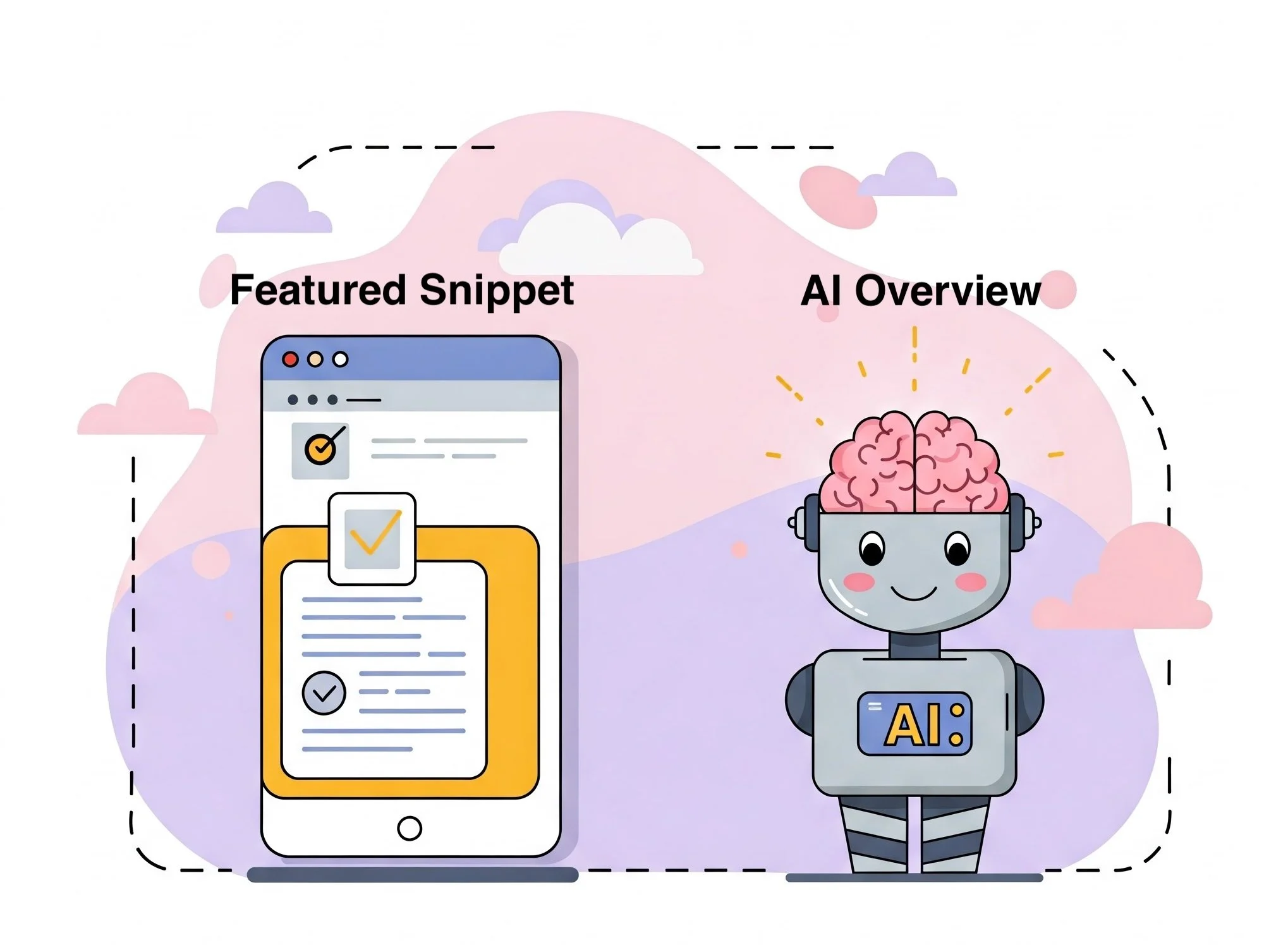
AI Overviews vs Featured Snippets
Understanding where these two features differ helps you allocate optimisation effort correctly. They’re not interchangeable.
| Factor | AI Overviews | Featured Snippets |
|---|---|---|
| Source | Multiple pages | Single page |
| Content | AI-synthesised | Direct excerpt |
| Control | Indirect | More direct |
| Click-through | Lower | Moderate |
| Appearance rate | 15-20% of queries | ~8-12% of queries |
| Optimisation signal | Authority, structure, depth | Format, directness, position |
| Attribution | Collapsed citations | Prominent link |
The AI Overviews vs Featured Snippets comparison makes one thing clear: featured snippets give you more direct control. You can format a page specifically to win a snippet. AI Overviews are harder to target deliberately, you build the right signals and let Google’s system decide.
That said, appearing in AI Overviews vs Featured Snippets carries significant brand exposure even when click-through is low. If your brand gets cited consistently in AI-generated answers, you build recognition with users who may search for you directly later.
How to Optimise for Featured Snippets
Featured snippet optimisation is well-understood territory. The core principle is simple: format your content to match what Google wants to display.
Format Content to Match Snippet Type
For paragraph snippets, write a direct 40 to 60 word answer immediately after a question-formatted heading. Don’t bury the answer in a long paragraph lead with it.
For list snippets, use proper HTML ordered or unordered lists. Google pulls list formatting directly. If your steps are in prose paragraphs, you won’t win a list snippet even if your content is excellent.
For table snippets, use clean HTML tables with clear headers. Keep tables to 3 to 4 columns for mobile compatibility. Tables comparing specifications, pricing tiers, or feature sets perform particularly well.
Target the Right Queries
AI Overviews vs Featured Snippets, Featured snippets appear most often on queries that start with “what is,” “how to,” “why does,” “when did,” and similar question formats. Use tools like Ahrefs or SEMrush to identify queries in positions 1 through 10 where a featured snippet is already showing. Those are your clearest opportunities, Google has already decided this query warrants a snippet, and you just need to give it a better one.
Answer Questions Directly and Concisely
Google’s featured snippet algorithm favours answers that are direct, complete, and self-contained. A page that buries its answer in qualifications and caveats rarely wins snippets. Lead with the answer, then add supporting detail below.
How to Optimise for Google AI Overviews
AI Overview optimisation is less about specific formatting tricks and more about building the kind of content and site authority that AI retrieval systems favour.
Build Genuine Topical Authority
AI search results draw heavily on topical authority signals. A site with deep, consistent coverage of a topic area gets retrieved more reliably than a site with one strong article surrounded by unrelated content.
Build content clusters around your core topics. A pillar page supported by 8 to 12 cluster articles covering related subtopics signals to Google’s AI that your site is a comprehensive resource, not a single-article wonder.
Use Clear, Extractable Statements
AI systems need to extract specific facts and claims from your content. Write in clear, declarative sentences. Avoid overly hedged language for factual claims. Structure content so key points stand alone as complete thoughts rather than requiring surrounding context to make sense.
This is especially important for definitions, statistics, and process steps. If your key fact requires three paragraphs of context to interpret, AI retrieval will struggle to use it accurately.
Implement Supporting Schema Markup
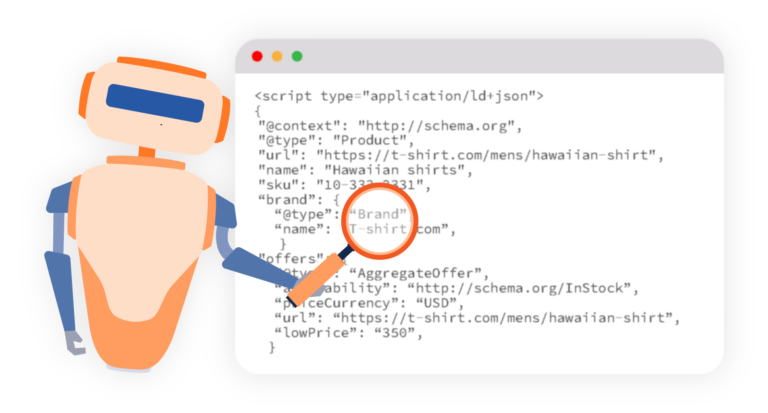
FAQ schema, HowTo schema, and Article schema all give AI systems cleaner signals about your content structure. Pages with validated structured data get parsed more reliably by AI retrieval systems. This doesn’t guarantee AI Overview inclusion, but it removes friction from the process.
Build Off-Page Authority Signals
AI Overviews favour sources that demonstrate broad authority signals, editorial backlinks, brand mentions in credible publications, consistent E-E-A-T across the site. A page that ranks in position 3 with strong off-page authority often gets cited in AI Overviews over the position 1 result if the authority signals are significantly stronger.
Dual Optimisation Strategy
The good news is that featured snippet optimisation and AI Overview optimisation share a significant overlap. Strong content fundamentals serve both.
Step1: Identify Dual-Opportunity Queries
Some queries trigger both AI Overviews and featured snippets. Run your target queries in Google and note which SERP features appear. Queries that currently show a featured snippet are good candidates for AI Overview AI Overviews vs Featured Snippets optimisation too, Google has already validated the informational intent.
Step 2: Structure Content for Both
Use this content structure for pages targeting both features:
- H2 question heading (“What is [topic]?”)
- Direct 50-word paragraph answer (targets paragraph snippet)
- Supporting detail with specific examples and data (supports AI Overview retrieval)
- Structured list or table (targets list/table snippet)
- FAQ section with schema (supports both features)
This structure gives Google clean snippet candidates at multiple points while building the depth that AI retrieval favours.
Step 3: Monitor Performance Separately
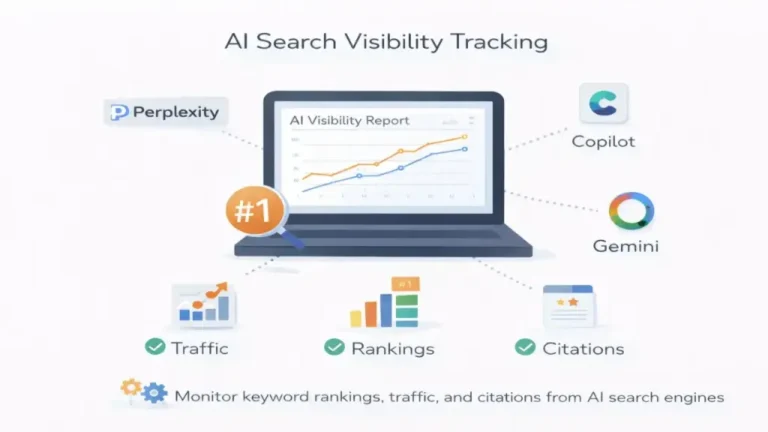
Track featured snippet wins and losses in Google Search Console and Ahrefs. For AI Overview appearances, use tools like Semrush’s AI Overview tracking feature or manual SERP monitoring. Don’t conflate performance in one feature with the other, they move independently.
Step 4: Update Regularly
Both features favour fresh content. Google is more likely to pull from a recently updated page for AI Overviews, and featured snippet holders can be displaced if a competitor publishes a more current, better-formatted answer. Build a quarterly content refresh cycle for your highest-traffic informational pages.
Mistakes That Cost You Both Features
Writing for one feature only. Paragraph-optimised content that ignores list formatting misses list snippet opportunities. Content structured only for snippets without depth and authority misses AI Overviews. Build both signals into every informational page.
Ignoring mobile formatting. Both features appear prominently on mobile. Tables with 6 columns, unformatted code blocks, and dense paragraphs perform poorly on mobile SERPs. Test every page on mobile before publishing.
Skipping schema markup. FAQ and HowTo schema directly support both feature types. Skipping schema means relying entirely on Google’s ability to parse your HTML correctly which it usually does, but verified schema is always more reliable.
Targeting only high-volume queries. Featured snippets and AI Overview citations on lower-volume, specific queries still drive qualified traffic and brand recognition. Don’t ignore the long tail.
FAQs
What is the difference between AI Overviews and featured snippets?
Featured snippets pull a direct excerpt from a single page and display it at position zero with a clear attribution link. AI Overviews generate a synthesised answer using multiple sources, with citations shown in a collapsed format. Featured snippets are more directly controllable through content formatting; AI Overviews depend more on authority and content depth signals.
Can a page appear in both AI Overviews and featured snippets?
Yes. A single page can be cited in an AI Overview and simultaneously hold the featured snippet for the same or related queries. The two features operate independently. Strong content that serves both optimisation approaches can win presence in both SERP features at the same time.
Do AI Overviews hurt featured snippet click-through rates?
Yes, in most cases. When an AI Overview appears above a featured snippet, it absorbs a significant portion of user attention. Studies from 2024 and 2025 found that click-through rates on featured snippets dropped noticeably on queries where AI Overviews also appeared. This makes winning the AI Overview citation increasingly important for maintaining visibility.
How do I know if my page is being cited in AI Overviews?
Manual SERP checking is the most reliable method, search your target queries in Google and note whether your page appears in citations. SEMrush added AI Overview tracking to its position tracking features in 2024. Tools like Authoritas and BrightEdge also offer AI Overview monitoring for agencies managing multiple clients.
What content format works best for featured snippets?
It depends on the query type. Definition and explanation queries favour 40 to 60 word paragraph answers placed immediately after a question-formatted heading. Process and how-to queries favour numbered lists. Comparison queries favour tables. Match your format to the query intent and the snippet type Google is already showing for that query.
Does schema markup help with AI Overviews?
Schema markup helps AI systems parse and retrieve your content more accurately, which improves the probability of being cited in AI Overviews. FAQ schema, HowTo schema, and Article schema are the most relevant types. Schema doesn’t guarantee AI Overview inclusion, but it removes retrieval friction and strengthens structured data signals.
How often do AI Overviews appear in Google Search?
As of 2025, Google AI Overviews vs Featured Snippetsappear on an estimated 15 to 20% of all searches, with higher rates on informational queries. Google has expanded AI Overview coverage significantly since the May 2024 launch. Appearance rates vary by query type, country, and device, informational and how-to queries see the highest rates.
Key Takeaways
- AI Overviews vs featured snippets are distinct features that require different but overlapping optimisation approaches
- Featured snippets respond directly to content formatting question headings, direct answers, and structured lists give you the most control
- AI Overviews favour topical authority, content depth, extractable statements, and strong off-page signals
- A dual optimisation structure direct answers followed by deep supporting content with schema markup, targets both features efficiently
- Monitor both features separately since they move independently and require different performance metrics
Want a white label content strategy that targets both AI Overviews and featured snippets across your client portfolio? 7thclub.com’s white label SEO services include SERP feature optimisation as a core deliverable. Talk to our team about building it into your agency offer.