AI-Generated Content Ranking Powerful SEO Facts to Know
Here’s a question most content teams are asking right now: can AI-generated content actually rank on Google, or is it a shortcut that backfires?
The honest answer is yes but with conditions most people ignore. AI-generated content ranking success isn’t about fooling Google’s detectors. It’s about meeting the same quality bar that any well-researched, genuinely helpful article needs to clear. Google’s algorithm doesn’t care who wrote your content. It cares whether users find it useful.
This guide covers Google’s official stance on AI writing, the quality requirements your content must meet, how E-E-A-T applies to AI-assisted articles, and the editing process that separates rankable AI-Generated Content Ranking from the stuff that gets buried.
What Google’s AI Content Policy Actually Says
Google’s position on AI-Generated Content Rankingcontent is more straightforward than most people realise. Their Search Central documentation states clearly that AI-generated content is not against Google’s guidelines as long as it demonstrates quality and serves users genuinely.
What Google does target is scaled content abuse: producing large volumes of low-quality AI-Generated Content Ranking pages specifically to manipulate search rankings. That’s a spam tactic. It’s been against Google’s guidelines for years, and AI just made it easier to do at scale. The problem isn’t the AI. It’s the intent and the quality of what gets published.
The Helpful Content System
Google’s Helpful Content system became part of the core ranking algorithm in March 2024. It evaluates every page for one core question: was this made primarily for people, or primarily for search engines?
Pages that fail this check share common traits:
- Generic information with no added insight or perspective
- Content that doesn’t fully answer the original query
- No evidence of first-hand experience or expertise
- Thin coverage of a topic that deserves more depth
- No clear author attribution or credentials
AI-Generated Content Rankingcontent can fail every one of these checks. It can also pass all of them. The difference is what happens between the AI draft and the publish button.
AI-Generated Content Ranking
Understanding that AI content can rank is only half the picture. Knowing what quality standards it needs to meet is where the practical work starts.
Factual Accuracy Is Non-Negotiable
AI writing tools generate fluent, confident-sounding text. They don’t always generate accurate text. Hallucinated statistics, outdated product details, and incorrect attributions appear regularly in AI drafts and publishing them damages your credibility with both users and search algorithms.
Build a verification step into every AI content workflow. Check every statistic against its original source. Confirm that named tools, people, and studies exist and that the details match. This step alone separates responsible AI content SEO from the kind that creates long-term brand problems.
Depth Over Surface Coverage
Generic AI output answers questions at the most obvious level. Ranking content goes further. It addresses edge cases, acknowledges nuance, and provides the kind of specific detail that only comes from genuine topic knowledge.
When using AI tools to draft content, don’t stop at the first output. Push for specifics. Ask for concrete examples. Request data with named sources. Ask the model to address common problems or complications with the standard approach. Then verify everything it produces and add what it can’t provide.
Specificity and Original Data
Vague claims don’t build authority. Specific, sourced claims do. Compare these two sentences:
Vague: “Many marketers now use AI in their content workflow.”
Specific: “According to HubSpot’s 2025 State of Marketing report, 64% of marketers used AI tools in their content workflow up from 48% the previous year.”
The second version gives users something concrete and citable. It signals to Google that your content operates at a standard where claims require evidence. Make this the default for every AI-assisted piece you publish.
E-E-A-T Considerations for AI Content SEO
.png)
E-E-A-T (Experience, Expertise, Authoritativeness, Trustworthiness) is Google’s framework for evaluating content quality. Each component requires deliberate human input when you’re working with AI drafts.
Experience: The Component AI Can’t Fake
AI tools have no personal experience. They’ve processed enormous amounts of text, but they haven’t run a technical SEO audit on a real client site, watched a page recover after a core update, or made a strategic call that backfired. You have.
Adding genuine experience to AI content is the highest-leverage quality improvement available. It’s also what makes your content genuinely different from thousands of other AI-assisted articles covering the same keyword. Even a single paragraph describing a real scenario from your own work changes the character of a piece significantly.
Expertise: Precision Matters
AI writing often sounds authoritative without being technically precise. Review every AI draft in your specialist area for accuracy and depth. Correct imprecise terminology. Add technical nuance that only a practitioner would know. Link to authoritative sources that support key claims.
This is where subject matter experts add the most value in a human-AI collaboration workflow. A brief expert review and annotation pass catches the gaps that make AI content generic.
Authoritativeness: Name Your Authors
Anonymous AI content has no authority foundation. Attribute every article to a named author with a detailed, credentialled bio and verifiable external presence. This applies equally to AI-assisted and fully human-written content but it matters more for AI content because the authorship question is already in the reader’s mind.
Trustworthiness: Source Everything
Include accurate publication and update dates. Link to primary sources for statistics and factual claims. Note where information may change over time. Add appropriate disclaimers for specialist advice. These signals build the trustworthiness layer that AI drafts consistently lack by default.
Human-AI Collaboration Best Practices
The most effective AI writing SEO approach treats AI as an acceleration tool, not a replacement for expertise. Here’s a workflow that produces consistently rankable content.
1: Research Before You Prompt
Don’t open your AI tool first. Start with keyword research, competitor analysis, and topic research. Understand what the top-ranking pages cover, what they miss, and what angle your content will take. A detailed brief produces dramatically better AI output than a vague topic prompt.
2: Generate Section by Section
Ask for an outline first. Review and adjust it. Then generate each section individually rather than requesting a full article in one prompt. This gives you more control at each stage and makes the editing process more manageable.
3: Edit Aggressively (30 to 50% Rewrite)
Plan to rewrite at least a third of every AI draft. The sections that consistently need the most work:
- Introductions (usually generic, rewrite to open with a specific problem or stat)
- Factual claims (verify every one against primary sources)
- Examples (replace generic illustrations with specific, real ones)
- Conclusions (usually vague, rewrite with concrete takeaways)
4: Add the Human Layer
After editing, add the elements AI genuinely can’t produce:
- First-hand experience from real campaigns or client work
- Original data, even if it’s just internal observations
- Expert perspective that reflects your genuine professional view
- Specific case details with real outcomes where possible
5: Optimise and Publish With Attribution
Complete your standard SEO optimisation like keyword placement, internal links, schema markup, meta data then publish with a named author, complete bio, and accurate dates. This is the final layer that connects your content to the trust signals Google evaluates.
Editing Strategies That Improve AI Content Rankings
Systematic enhancement consistently lifts AI content performance. These are the strategies that make the clearest difference.
| Strategy | What It Fixes | Tool |
|---|---|---|
| Readability editing | Dense paragraphs, passive voice | Hemingway Editor |
| Grammar and clarity | Awkward phrasing, errors | Grammarly |
| Keyword optimisation | Topical relevance gaps | Surfer SEO, Frase |
| Fact verification | Hallucinated claims | Primary source research |
| Schema markup | SERP feature eligibility | Rank Math, Yoast SEO |
Strengthen Every Introduction
AI introductions default to restating the topic. Strong introductions open with a specific problem, a surprising statistic, or a direct question that speaks to what the reader actually cares about. Rewriting introductions consistently reduces bounce rates and improves engagement signals.
Break Up Dense Content
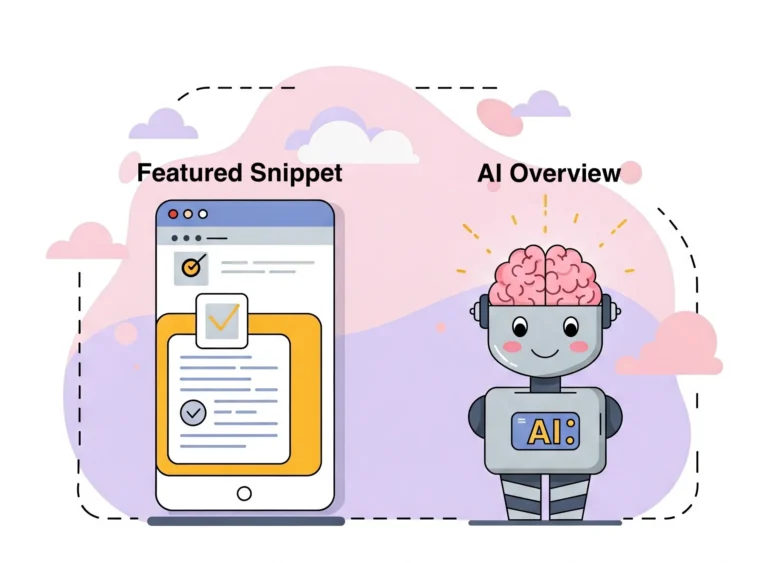
AI tools produce long paragraphs without natural breaks. Use subheadings every 200 to 300 words. Use bullet points for lists of items or steps. Keep paragraphs to 2 to 4 sentences. This formatting improves readability and makes content more likely to appear in AI Overviews and featured snippets.
Add Internal and External Links
AI drafts contain no links. Adding relevant internal links to related content on your site improves topical authority signals and keeps users engaged. Adding external links to authoritative sources like Google documentation, published studies, industry reports signals that your content meets an evidential standard.
Mistakes That Prevent AI Content From Ranking
Publishing raw AI output. Unedited AI drafts rarely meet competitive ranking standards. Every piece needs substantive human editing before it goes live not a quick proofread.
Scaling volume without quality control. High-velocity AI-Generated Content Ranking publishing without editorial standards is exactly what Google’s scaled content abuse policy targets. Speed without quality is a rankings liability, not an asset.
Skipping author attribution. Anonymous AI content signals nothing about expertise or credibility. Always publish under a named, credentialled author.
Ignoring ChatGPT content ranking nuance by topic. AI content performs very differently across topic categories. Informational content on non-YMYL topics is the lowest-risk, highest-upside use case. YMYL content requires expert review regardless of how well the AI draft reads.
Treating AI output as finished work. The AI draft is a starting point. The finished article is what happens after research verification, experience layers, expert review, and optimisation. Never confuse the two.
FAQs about AI-Generated Content Ranking
Can AI-generated content rank on Google in 2026?
Yes. Google’s official policy confirms that AI-generated content can rank when it meets quality standards and genuinely serves users. Content origin (human or AI) is not a ranking factor. Quality, relevance, E-E-A-T signals, and helpfulness determine ranking performance.
Does Google penalise AI-written content?
Google does not penalise content for being AI-written. It penalises low-quality content and content produced at scale to manipulate rankings. A well-researched, accurately sourced, human-reviewed AI-assisted article faces no inherent ranking disadvantage.
What makes AI content fail to rank?
AI AI-Generated Content Ranking typically fails due to lack of original experience, unverified factual claims, generic examples without specificity, missing author attribution, thin coverage of the topic, and no supporting off-page authority signals. These are quality failures, not AI failures.
How much should I edit AI-generated content before publishing?
Plan to rewrite 30 to 50% of most AI drafts. Focus editing effort on introductions, factual claims, examples, and conclusions. Add first-hand experience, verify statistics, replace generic illustrations with specific ones, and ensure every section adds genuine value beyond what competing pages already provide.
Which AI tools work best for SEO content creation?
ChatGPT (GPT-4o), Claude, and Gemini are the strongest general-purpose drafting tools. For SEO-specific workflows, Surfer SEO and Frase combine AI writing with keyword and topical optimisation guidance. Always use outputs as drafts requiring substantial editing, not finished articles.
How does E-E-A-T apply to AI-generated content?
Each E-E-A-T component requires deliberate human input. Experience means adding first-hand scenarios AI can’t generate. Expertise means reviewing drafts for technical accuracy. Authoritativeness means attributing content to credentialled authors with external presence. Trustworthiness means sourcing claims and maintaining accurate publication dates.
Is AI content safe to use for YMYL topics?
AI-Generated Content Ranking in health, finance, and legal categories requires mandatory expert review before publishing. Unverified AI content in these areas risks user harm and violates Google’s quality guidelines. Use AI for initial drafting only, then have a qualified professional review and approve the final content.
Wrap Up
- AI-generated content ranking is achievable, Google evaluates quality and intent, not content origin
- Google’s policy permits AI-assisted content that meets quality standards; it targets scaled low-quality spam, not responsible AI use
- E-E-A-T signals require human input named authors, verified facts, first-hand experience, and credible sourcing built into every piece
- Edit 30 to 50% of every AI draft introductions, factual claims, examples, and conclusions need the most attention
- Human-AI collaboration beats AI alone use AI to accelerate drafting and humans to add depth, accuracy, and original perspective
Want a white label content workflow that balances AI efficiency with the quality standards that actually rank? 7thclub.com’s white label SEO services include fully edited, E-E-A-T optimised content production under your brand. Contact our team to learn how we structure it for agency clients.