Unlinked Brand Mentions Smart Steps to Earn Backlinks 2026
Someone wrote about your brand. They praised your product, referenced your data, or named you as a resource. But they never linked back to your site. That’s a missed backlink sitting right there, waiting to be claimed.
Unlinked brand mentions are one of the most underused link building opportunities in SEO. Unlike cold outreach where you’re pitching to strangers, these are people who already know your brand well enough to mention it. The groundwork is done. All you need to do is ask for the link and this guide shows you exactly how to do that at scale.
What Are Unlinked Brand Mentions and Why Do They Matter?
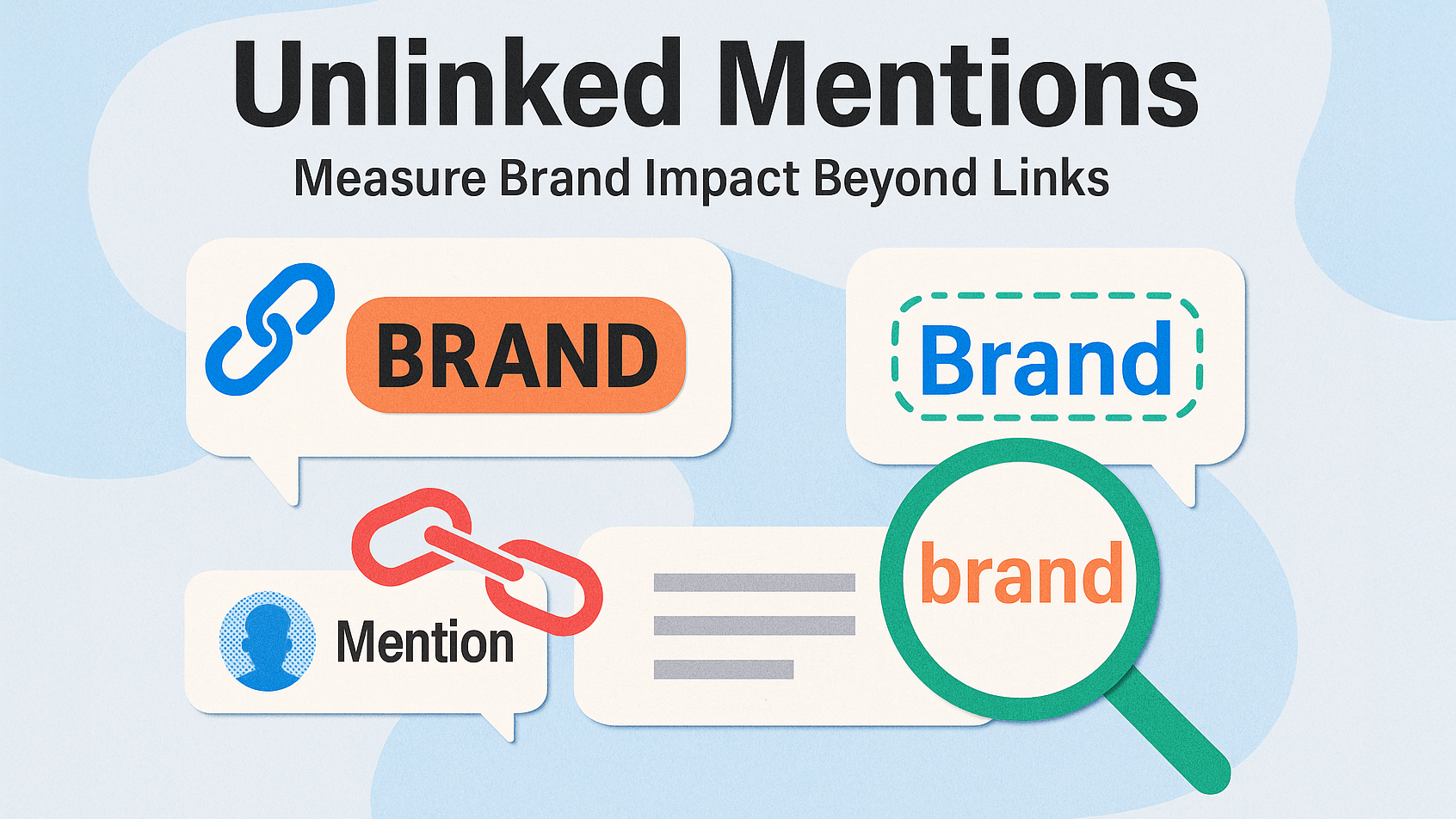
An unlinked brand mention happens when a website references your brand, product name, or content without adding a hyperlink back to your site. It could be a blogger who mentions your tool in a roundup, a journalist who cites your study, or a forum post that recommends your service, none of them linked to you.
From an SEO standpoint, these mentions represent what SEOs call “link equity left on the table.” The author clearly values your brand enough to name it. Converting that mention into an actual backlink requires a short, polite outreach email and the conversion rate is significantly higher than cold link prospecting because the relationship already exists at some level.
According to Ahrefs’ link building research, unlinked brand mentions are consistently ranked among the highest-converting link building tactics because the outreach is contextually relevant and the ask is low-friction. You’re not creating work for the webmaster; you’re pointing out a quick edit they can make.
Beyond link equity, monitoring unlinked brand mentions also gives you useful brand intelligence. You learn who’s talking about you, in what context, and on which platforms, insights that feed into your PR, content, and competitive strategy.
Tools to Find Unlinked Brand Mentions
You can’t convert what you can’t find. Fortunately, several reliable tools make it straightforward to surface brand mentions across the web and filter out the ones that already link to you.
Google Alerts is the free starting point. Set up alerts for your brand name, product names, and any common misspellings. Google will email you whenever new content mentioning those terms is indexed. It’s not comprehensive, but it catches a meaningful volume of mentions and costs nothing.
Ahrefs Content Explorer is more powerful for this specific task. Search your brand name in Content Explorer, then filter results by domains that don’t already link to your site. The “Highlight unlinked domains” feature inside Site Explorer is particularly useful, it shows you referring domains that mention your brand in their content but haven’t linked to you. This cuts prospecting time significantly.
SEMrush Brand Monitoring (part of the .Trends suite) tracks mentions across the web and categorizes them by sentiment, reach, and link status. You can filter specifically for unlinked mentions and export them directly into an outreach workflow.
Mention.com and BrandMentions are purpose-built brand monitoring platforms. Both let you set up keyword streams for your brand and filter by whether a backlink is present. BrandMentions in particular has a solid unlinked detection feature that flags mentions without attribution links.
Google Search Operators also work well for manual prospecting. Try searching: "YourBrandName" -site:yourdomain.com in Google. Scroll through results and manually check whether each mention includes a link. It’s time-consuming but effective for smaller brands or specific campaigns.
Once you have a list of unlinked brand mentions, the next step is qualifying them. Not every mention is worth chasing. Prioritize by domain authority (DR 30+ is a reasonable threshold), traffic estimates, topical relevance, and whether the page itself is indexed and ranking.
How to Set Up a Monitoring System
Finding unlinked brand mentions once is useful. Having a system that catches them automatically is what scales the tactic into a repeatable link building channel.
Start by setting up Google Alerts for every variation of your brand name including common misspellings, product names, and the names of key team members if they’re public-facing. Set alert frequency to “as it happens” or daily digests depending on your brand’s mention volume.
In Ahrefs, save a Content Explorer search for your brand name and schedule weekly exports. Cross-reference these against your existing backlink profile to automatically identify unlinked instances.
If you use a CRM or project management tool like Notion, Trello, or Airtable, build a simple pipeline for mention tracking: columns for “Found,” “Qualified,” “Outreach Sent,” “Follow-up Due,” and “Converted.” This keeps your link reclamation workflow visible and accountable.
Set a recurring calendar task weekly or bi-weekly to process new mentions, qualify prospects, and send outreach. Consistency matters more than volume here. Reaching out to 10 well-qualified unlinked brand mentions per week will outperform a sporadic blast of 100 cold prospects every few months.
For agencies managing multiple clients, white-label versions of tools like SE Ranking or Dash. This can consolidate brand monitoring across client accounts into a single dashboard, making it easier to scale this tactic without drowning in separate tool logins.
Writing Outreach That Actually Gets Responses
Your outreach email is the difference between a converted mention and a missed opportunity. The goal is to make the ask feel helpful, not pushy because in most cases, adding a link genuinely improves the author’s content.
Keep emails short. Three to four sentences is ideal. Lead with genuine appreciation, reference the specific mention so they know you’ve actually read their content, and make the request clear and easy to act on.
Here’s a template that works well:
Subject: Quick note about your mention of [Brand Name]
Hi [First Name],
I came across your article on [Topic] and noticed you mentioned [Brand Name], thanks for including us! I wanted to reach out because we don’t currently have a link pointing back to our site in that section. Would you be open to adding one? Here’s the direct URL: [URL]. Happy to return the favour if there’s ever a relevant opportunity on our end.
Thanks, [Your Name]
A few things make this template effective. It references the specific article (shows you read it), acknowledges their work positively, and frames the request as a minor tweak rather than a favour. The reciprocity offer at the end is optional but can improve response rates.
For high-authority placements, a slightly more personalised email performs better. Reference something specific about their content, mention why the link would add value for their readers, and skip any transactional tone. Treat it like a professional conversation, not a form submission.
What Conversion Rates to Expect
Realistic expectations matter when building any link acquisition process, and unlinked brand mentions are no exception.
Industry benchmarks suggest conversion rates for mention-to-link outreach typically fall between 25% and 40%, which is considerably higher than cold link prospecting (which often sits below 10%). The reason is straightforward: you’re reaching out to people who already think favourably enough about your brand to write about it. The friction is low.
That said, your actual conversion rate depends on several factors. Domain quality matters, smaller blogs tend to be more responsive than major publications where content goes through editorial teams. Timeliness matters too. Reaching out within a week or two of a mention being published is far more effective than following up months later when the author has moved on.
Email quality, subject line, and follow-up cadence all influence results. A single follow-up email sent 5-7 days after the initial outreach typically improves conversion by 10-15% without feeling aggressive. Beyond two emails, response rates drop sharply and you risk damaging the relationship.
Track your own conversion rates per campaign. Over time, you’ll identify which mention types convert best (roundups vs. blog posts vs. news articles), which domains are more responsive, and which email variants get more replies. That data makes each future campaign more efficient.
Common Mistakes to Avoid
Chasing every unlinked mention regardless of quality is the most common mistake. A DR 5 blog with no traffic converting into a backlink adds minimal value and wastes outreach time. Be selective.
Sending generic, clearly templated emails is another pitfall. Authors can tell when they’ve received a copy-paste message, and it significantly reduces your response rate. Even a single personalised sentence referencing their specific content makes a difference.
Ignoring social media mentions is also a missed opportunity. Unlinked brand mentions on LinkedIn, Twitter/X, or Reddit don’t pass traditional link equity, but they can be the starting point for a relationship. Engage with the mention socially, then follow up professionally if there’s a relevant content opportunity.
Finally, not tracking outreach at all means you’re flying blind. Without a simple CRM or spreadsheet, you’ll lose track of who you’ve contacted, when to follow up, and what results you’re generating. Even a basic Google Sheet is better than nothing.
Frequently Asked Questions
What counts as an unlinked brand mention?
Any time a website references your brand name, product, or content without including a clickable hyperlink to your site, that’s an unlinked brand mention. This includes blog posts, news articles, forum discussions, and review sites. The goal of link reclamation is to convert these mentions into actual backlinks by reaching out to the site owner or author.
Are unlinked brand mentions worth pursuing for small brands?
Yes, especially for smaller brands. If your brand is being mentioned without links, those mentions likely come from genuine fans, customers, or peers who are already receptive to a short outreach message. Even a handful of high-quality conversions per month can meaningfully improve your backlink profile over time.
How often should I search for unlinked brand mentions?
Weekly or bi-weekly checks are ideal for most brands. Set up automated alerts through Google Alerts and Ahrefs to catch mentions as they happen, and schedule a regular session to qualify prospects and send outreach. Letting mentions age reduces your conversion rate.
What’s the best tool for finding unlinked brand mentions?
Ahrefs is the most comprehensive paid option, particularly its Content Explorer and the “Highlight unlinked domains” feature. For free options, Google Alerts combined with manual Google search operators covers a lot of ground. If budget allows, dedicated tools like BrandMentions offer more targeted filtering.
Should I offer anything in exchange for the link?
You don’t need to. Most unlinked brand mentions convert without any exchange because the ask is minor, the author is already familiar with your brand and linking is a small edit. However, offering a reciprocal mention, a quote for their future content, or sharing their article on your channels can increase goodwill and improve response rates for borderline cases.
How do I handle unlinked mentions on major news sites?
Large publications often have editorial policies that prevent adding links post-publication. In these cases, focus your outreach on the journalist rather than the publication and build the relationship for future coverage. Sometimes you can get a mention updated; other times the value lies in the relationship you’re cultivating.
What anchor text should I request?
Request a natural, branded anchor text, your brand name or product name works well. Avoid requesting exact-match keyword anchors, as this looks unnatural and can raise red flags with Google’s link evaluation systems. Let the context of the mention guide the anchor text suggestion.
Key Takeaways
Unlinked brand mentions are a high-conversion, low-friction link building channel that most businesses leave completely untapped. The people writing these mentions already know and value your brand, that’s the hardest part of link building already done.
Set up a monitoring system using Google Alerts, Ahrefs, or BrandMentions to catch unlinked brand mentions consistently. Qualify prospects by domain authority and topical relevance before reaching out. Keep your outreach short, personalised, and helpful. Follow up once. Track everything.
With realistic conversion rates sitting between 25-40%, this tactic delivers results that cold outreach campaigns rarely match. Start with a single week of prospecting and outreach, you’ll likely have new backlinks within days.
If you want to build a scalable link building system that goes beyond brand mention link building, explore our complete guide to link reclamation and our white-label link building services for agencies looking to deliver consistent results for clients.