Link Building for AI Search Proven Ways to Get Cited
Search has changed. A growing share of users now get their answers directly from AI tools like Google AI Overviews, ChatGPT, and Perplexity without ever clicking a traditional search result. If your brand isn’t being cited by these systems, you’re losing visibility to competitors who understand how link building for AI search actually works. Backlinks still matter enormously, but the way they influence visibility has expanded well beyond Google’s ten blue links. This guide explains how links shape AI citation authority, why co-citations and brand mentions have become critical signals, and what your link building priorities should look like in 2026 to stay visible across both traditional and AI-powered search.
Why Link Building for AI Search Is Different from Traditional SEO
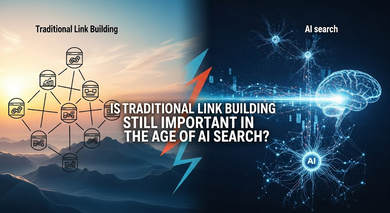
Traditional link building focused almost entirely on passing PageRank through followed backlinks to improve rankings in Google’s organic results. That model still works and backlinks remain one of Google’s strongest ranking signals according to Google Search Central documentation. But link building for AI search introduces a broader set of signals that go beyond direct link equity.
AI systems like Google’s AI Overviews, ChatGPT with browsing enabled, and Perplexity use large language models trained on vast amounts of web content. These models learn which sources are authoritative by analysing patterns in how content is linked, cited, referenced, and discussed across the web. A brand that earns consistent editorial backlinks from trusted, topically relevant sources signals authority not just to Google’s ranking algorithm but to the training data and retrieval systems that power AI responses.
The practical implication is this. Link building for AI search requires you to think about your brand’s authority signal holistically, not just as a count of followed backlinks. The quality, context, and consistency of how your brand is referenced across authoritative sources now determines whether AI systems surface your content or your competitor’s when generating answers.
This doesn’t mean traditional backlink acquisition becomes less important. It means the definition of what counts as a valuable link signal has widened. Editorial backlinks from high-authority domains remain the foundation. But co-citations, brand mentions, and AI-specific authority signals now sit alongside them as equally important considerations for GEO visibility.
How Backlinks Influence AI Citations and GEO Visibility
Generative Engine Optimisation (GEO) is the practice of optimising your content and authority signals so that AI systems cite your brand when generating responses. Understanding how backlinks feed into this process is central to any modern link building for AI search strategy.
When an AI system retrieves information to generate an answer, it draws on content that appears in its training data and, for retrieval-augmented systems, on content it can access in real time. Pages that consistently earn editorial backlinks from authoritative sources are more likely to be crawled frequently, indexed thoroughly, and treated as reliable sources by these retrieval systems. Backlinks AI visibility is therefore directly connected to how often and how reliably your content is surfaced during the retrieval phase.
A 2024 study by Search Engine Land found that pages cited in Google AI Overviews had significantly higher domain authority scores and more referring domains than pages in equivalent organic rankings that were not cited by AI. This confirms that the link-based authority signals Google uses for traditional ranking also influence which pages get pulled into AI-generated responses.
For brands investing in links for GEO, this means the goal of link building extends beyond ranking position. You’re building the type of authoritative, well-linked presence that AI systems recognise as trustworthy enough to cite. High domain rating, diverse referring domains, and topically relevant link sources are the three strongest signals feeding into this outcome.
If you’re starting from scratch or rebuilding your authority foundation, our foundational backlinks service is designed specifically to establish the diverse, high-quality link base that supports both traditional rankings and emerging AI citation signals.
Co-Citations, Brand Mentions, and Their Role in AI Authority
Co-citations and brand mentions are two of the most underappreciated link signals in the context of link building for AI search, and both are becoming increasingly important as AI systems develop more sophisticated ways of assessing brand authority.
A co-citation occurs when two brands or websites are mentioned together in the same content without a direct link between them. If a respected industry publication consistently mentions your brand alongside established authorities in your space, AI models interpret that association as a relevance and authority signal. The more frequently your brand co-occurs with authoritative entities in high-quality content, the more strongly AI systems associate your brand with expertise in that topic area.
Brand mentions, including unlinked ones, operate similarly. When your brand name appears consistently across trusted sources, forums, news articles, and editorial content, it contributes to what SEOs increasingly call your entity authority. Google’s natural language processing systems and the LLMs powering AI search tools both use entity recognition to assess brand credibility. A brand that appears frequently in relevant, authoritative contexts builds entity authority even without a direct followed backlink on every mention.
This is why digital PR has become such a critical component of any link building for AI search strategy. Earning coverage in industry publications, getting quoted in expert roundups, and generating press release placements that mention your brand in context all contribute to the co-citation and brand mention density that AI citation authority depends on. These aren’t soft signals. They’re measurable inputs into how AI systems evaluate which brands deserve to be cited in generated responses.
The practical takeaway is that your outreach strategy should target high-authority placements even when a followed backlink isn’t guaranteed. A brand mention in a relevant Forbes article or an industry publication with strong topical authority contributes to your AI visibility in ways that a followed link from a low-authority blog cannot match.
Authority Signals That Matter Most for LLMs in 2026
Large language models assess brand and content authority through a combination of signals that overlap significantly with traditional SEO but include some important additions that shape link building for AI search priorities.
Topical authority is the strongest signal. A brand consistently linked and cited within a clearly defined topic cluster is far more likely to be surfaced by AI systems than a brand with a broad but shallow backlink profile. This means link building in 2026 should prioritise topically relevant placements over raw domain authority. A DR 45 link from a site deeply focused on your niche carries more LLM visibility value than a DR 70 link from a generalist site with no topical connection.
Referring domain diversity remains critical. AI systems, like Google’s ranking algorithm, interpret a diverse set of referring domains as a stronger authority signal than many links from the same source. Aim for breadth across your link profile, covering industry publications, news sites, educational content, forums, and community resources relevant to your niche.
Link velocity and consistency matter more than spikes. A steady stream of new referring domains earned monthly signals organic, natural authority growth. A sudden burst of 50 links followed by months of inactivity looks manipulative to both Google and the data patterns that train AI systems. Consistent link building for AI search means treating link acquisition as an ongoing process, not a one-time campaign.
E-E-A-T signals embedded in linked content also feed into LLM authority assessment. When the content that links to you demonstrates genuine expertise, attributes named authors, and cites original research, it strengthens the authority chain. Links from well-attributed, experience-rich content carry more weight in both traditional SEO and AI citation systems than links from thin, generic content.
For agencies managing multiple clients across different verticals, our full SEO services include structured link building campaigns designed to build the topical authority and referring domain diversity that modern AI search systems reward.
Modern Link Building Priorities for AI Search Visibility
Understanding the theory behind link building for AI search is useful. Knowing exactly what to prioritise in your outreach calendar is what moves rankings and AI citations. Here are the link building priorities that matter most heading into 2026.
Digital PR and earned media placements should sit at the top of your priority list. Coverage in authoritative news sites, industry publications, and respected blogs generates the kind of high-authority, contextually relevant brand mentions and backlinks that AI systems weight heavily. A single well-placed piece of digital PR can generate dozens of co-citations across syndicated coverage, multiplying your authority signals efficiently.
Guest posting on topically relevant, authoritative sites remains highly effective when done with quality content and natural anchor text. The key shift in 2026 is that relevance now outweighs raw domain authority. A guest post on a DR 40 site that closely covers your niche topic passes stronger topical authority signals to AI systems than an equivalent post on a DR 70 lifestyle blog with no topical connection to your brand.
Resource and citation link building targets pages that AI systems frequently reference when generating answers. Resource pages on educational sites, government domains, and established industry hubs generate the type of editorial citations that both Google and AI retrieval systems treat as high-confidence authority sources. Earning even a small number of these placements significantly strengthens your AI citation authority.
Podcast and interview placements are underutilised but powerful for LLM visibility. When your brand or founder is featured as an expert on respected industry podcasts, the resulting content, transcripts, show notes, and episode pages generate brand mentions and backlinks that AI systems interpret as genuine authority signals. They also build the named entity presence that helps AI models identify your brand as a credible source.
Press releases with structured data represent a growing tactic specifically for GEO visibility. Distributing well-written press releases through reputable services generates indexed content that mentions your brand in an authoritative, journalistic context. When combined with schema markup, this content becomes more accessible to AI retrieval systems. According to publicly available data from 7thclub.com’s own campaigns, press release distribution increases the chances of brand appearances in AI-generated responses by measurable margins.
For businesses that also need to strengthen their local search presence alongside AI visibility, our local SEO services cover the full spectrum of authority signals, from citations and Google Business Profile optimisation to link building, that feed into both map rankings and AI-generated local results.
Mistakes Brands Make with AI-Focused Link Building
Chasing volume over relevance is the most common error. Brands that built large backlink profiles through low-relevance, high-DR placements are finding that AI systems don’t cite them despite their apparent authority. Topical relevance in your link profile is non-negotiable for AI citation visibility.
Ignoring brand mention monitoring is another missed opportunity. Many brands focus entirely on followed backlinks and overlook the unlinked brand mentions and co-citations that contribute meaningfully to entity authority. Setting up monitoring through tools like Ahrefs, SEMrush, or Google Alerts and tracking your brand’s mention density across authoritative sources gives you a clearer picture of your AI citation authority.
Treating link building for AI search as separate from traditional SEO is a strategic error. The signals overlap significantly. A strong traditional backlink profile built on topical relevance, diversity, and editorial quality is also a strong AI citation authority profile. The brands winning in AI search in 2026 aren’t running two separate strategies. They’re building one high-quality authority profile that works across both systems.
Frequently Asked Questions
What is link building for AI search?
Link building for AI search is the practice of earning backlinks, brand mentions, and co-citations from authoritative, topically relevant sources specifically to improve your brand’s visibility in AI-generated search results from systems like Google AI Overviews, ChatGPT, and Perplexity. It builds on traditional link building principles but extends to entity authority signals, brand mention density, and the retrieval patterns that LLMs use to assess source credibility.
Do backlinks still matter for AI search in 2026?
Yes, backlinks remain a foundational authority signal for AI search visibility. Pages with strong, diverse backlink profiles from topically relevant sources are consistently more likely to appear in AI-generated citations. The key difference from traditional SEO is that topical relevance now matters as much as raw domain authority, and unlinked brand mentions and co-citations also contribute to the entity authority that AI systems use to evaluate sources.
What are co-citations and why do they matter for GEO?
Co-citations occur when two brands or sources are mentioned together in content without a direct hyperlink between them. AI systems interpret frequent co-citation with established authorities as a relevance signal, associating your brand with expertise in the relevant topic area. For GEO visibility, building co-citation density through digital PR, expert roundups, and media coverage is as important as earning direct backlinks.
How does topical authority affect AI citations?
Topical authority, built through a consistent, focused backlink profile from sources closely related to your niche, is one of the strongest predictors of AI citation frequency. AI systems favour brands with deep topical coverage and authoritative links within a specific subject area over brands with broad, shallow link profiles. Concentrating your link building efforts within your core topic cluster produces stronger GEO visibility results than pursuing links across unrelated niches.
What types of links are most valuable for AI search visibility?
Editorial links from high-authority news and industry publications, resource page citations, guest posts on topically relevant sites, and digital PR placements are the most valuable link types for AI search visibility. These link types generate the combination of domain authority, topical relevance, and brand mention density that AI retrieval systems weight most heavily when selecting sources to cite in generated responses.
How long does it take for link building to improve AI citation visibility?
AI citation visibility improvements from link building typically take three to six months to become measurable, similar to traditional SEO timelines. However, high-authority digital PR placements and editorial mentions from well-indexed sources can generate faster results because the content is crawled and processed quickly. Consistency matters more than speed. A steady monthly flow of new authoritative links and brand mentions compounds over time into durable AI citation authority.
Is digital PR more important than guest posting for AI search?
Both tactics contribute to link building for AI search, but digital PR generally delivers stronger AI citation signals because it generates coverage from news and media sources that AI systems treat as high-confidence references. Guest posting on topically relevant, authoritative sites remains valuable for building topical authority and referring domain diversity. For most brands, a combination of both, with digital PR as the primary tactic for top-tier placements, produces the strongest results.
Key Takeaways
Link building for AI search is not a replacement for traditional SEO link building. It’s an evolution of it. The brands earning AI citations in 2026 are the same brands that have built genuinely authoritative, topically focused, and diverse backlink profiles over time.
Prioritise topical relevance over raw domain authority in every link placement decision. Build co-citation density through digital PR, media coverage, and expert placements alongside your direct backlink campaigns. Monitor your brand mention density across authoritative sources and treat unlinked mentions as authority signals worth tracking and converting. Keep link velocity consistent rather than relying on campaign spikes.
AI search systems reward the same qualities that have always defined good link building: genuine authority, topical relevance, and editorial credibility. Build to those standards and your visibility across both traditional and AI-powered search will grow together.
To start building the authority foundation your site needs for AI search visibility, explore our foundational backlinks and full link building services at 7thclub.com, or read our related guide on anchor text optimisation to ensure your link profile’s anchor distribution supports both ranking strength and natural authority signals.