Dofollow vs Nofollow Links: What You Need to Know in 2026
Here’s something that confuses a lot of SEO professionals: you earn a link from a strong publication, plug it into Ahrefs, and discover it’s nofollow. Does it still count? Should you even bother pursuing nofollow links?
Understanding dofollow vs nofollow links is fundamental to building a link profile that actually works. Get it wrong and you’ll either dismiss valuable link opportunities or waste budget chasing links that contribute less than you think.
This guide breaks down every link attribute Google recognises in 2026, including dofollow, nofollow, sponsored, and UGC. You’ll learn exactly how Google treats each type, what a healthy natural link profile looks like, and how to use each link type strategically. Whether you’re running link building campaigns for your own site or managing white label SEO for agency clients, this is the complete picture you need.
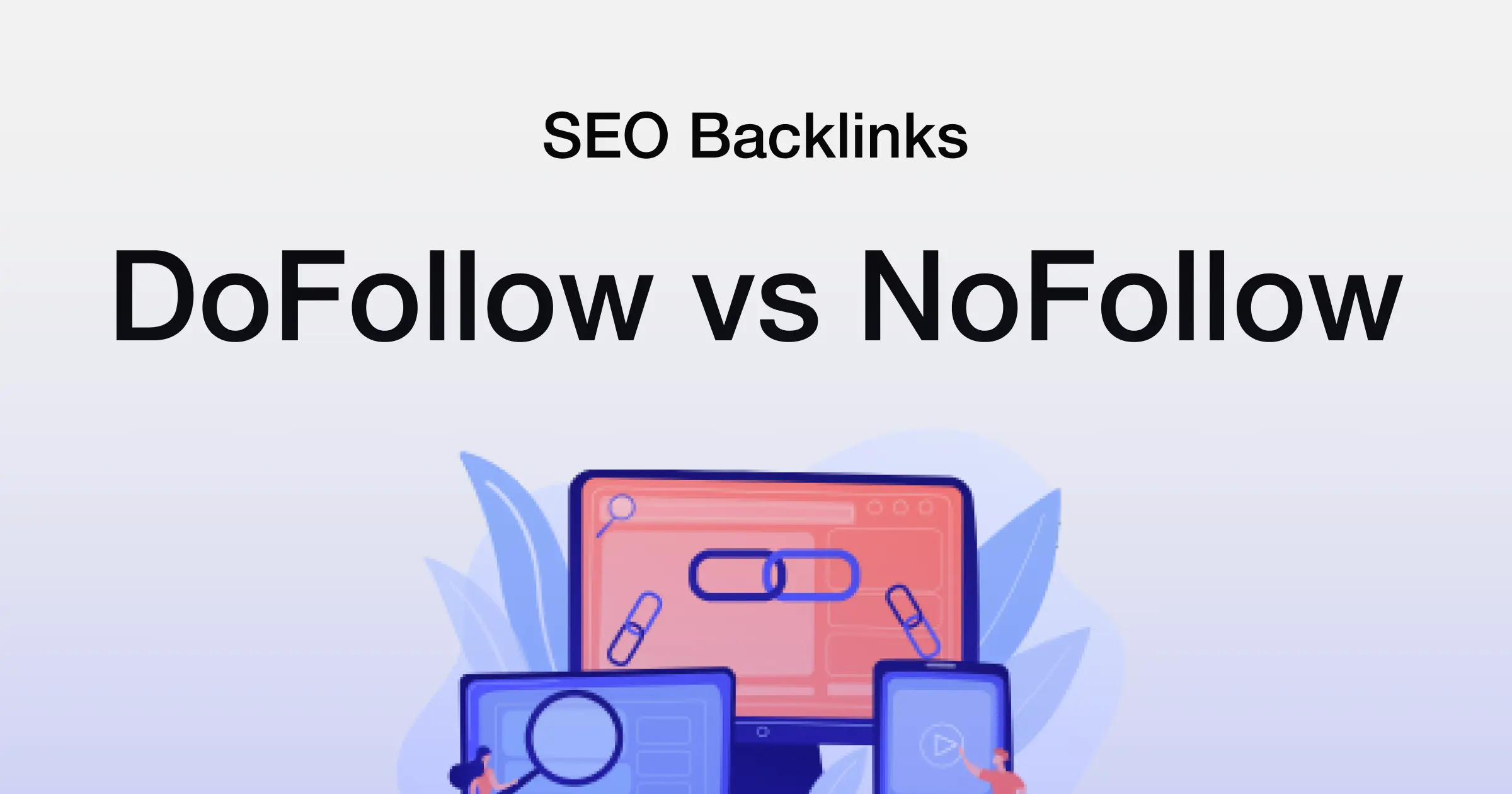
Dofollow vs Nofollow
When another website links to yours, that link either passes ranking signals or it doesn’t. That’s the essential dofollow vs nofollow distinction.
A dofollow link has no restricting attribute in its HTML code. It looks like this:
<a href="https://yoursite.com">anchor text</a>
Google follows this link, crawls the destination page, and passes what’s commonly called link equity or PageRank from the linking site to yours. This is what moves rankings.
A nofollow link includes a rel attribute that signals to search engines to treat the link differently:
<a href="https://yoursite.com" rel="nofollow">anchor text</a>
Originally introduced by Google in 2005 to combat comment spam, the nofollow attribute was a simple instruction: don’t follow this link, don’t pass PageRank. For over a decade, that’s exactly how Google treated it.
In 2019, Google updated its approach significantly. More on that shortly.
Why This Distinction Matters
For link building purposes, dofollow links from authoritative sites are the primary driver of Domain Rating growth and ranking improvements. Nofollow links don’t pass the same direct ranking signals, but they’re not worthless either.
The mistake most SEOs make is treating nofollow as completely useless and dofollow as the only thing worth pursuing. The reality in 2026 is more nuanced than that, and your link acquisition strategy should reflect it.
If you want to understand how link quality interacts with link type, our guide on high authority backlinks covers the authority metrics side in depth.
All Four Link Attributes Google Recognises in 2026
The dofollow vs nofollow conversation expanded in September 2019 when Google introduced two new link attributes alongside the existing nofollow. You now need to understand all four.
Dofollow (Standard Links)
This isn’t technically an attribute you add. It’s simply the absence of any restricting rel value. Standard editorial links, most guest post links, and contextual links within content are dofollow by default unless the publisher adds an attribute.
These pass full link equity, contribute to Domain Rating calculations in tools like Ahrefs and SEMrush, and are the primary target of any serious link building campaign.
Nofollow (rel=”nofollow”)
The original link attribute, still widely used. Wikipedia nofollow links all external links. Most forum platforms apply nofollow automatically. Many news sites use nofollow for links in comment sections.
As noted in Google’s official documentation, Google now treats nofollow as a hint rather than a directive. This means Google may choose to follow and count a nofollow link if its algorithms determine it’s editorially significant. In practice, this matters more than most SEOs realise.
Sponsored (rel=”sponsored”)
Google introduced this attribute specifically for paid links, including affiliate links, sponsored content, and any link placed as part of a commercial arrangement. It signals to Google that the link exists for commercial reasons rather than editorial merit.
If you’re running affiliate marketing content or publishing sponsored posts that include links, you should use rel=”sponsored” on those links. Using a dofollow link on paid placements violates Google’s guidelines and carries manual action risk.
UGC (rel=”ugc”)
UGC stands for user-generated content. This attribute is designed for links appearing in comments, forum posts, and community-contributed content. It tells Google that you as the site owner didn’t place this link editorially, and it should be weighted accordingly.
Most modern CMS platforms and forum software apply this automatically to user-submitted content. If yours doesn’t, it’s worth checking and configuring correctly.
Here’s a quick reference for all four link attributes side by side:
Dofollow: No rel attribute needed. Passes full link equity. Used for standard editorial links. Directly impacts rankings.
Nofollow: rel=”nofollow”. Treated as a hint by Google since 2019. Widely used on Wikipedia, forums, and comment sections. Limited but not zero ranking impact.
Sponsored: rel=”sponsored”. Required for paid and affiliate links. No direct ranking signal. Compliance with Google guidelines essential.
UGC: rel=”ugc”. Applied to user-generated content links. Minimal ranking signal. Protects site owners from penalties related to user-submitted spam links.
How Google Actually Treats Nofollow Links Today
This is where most content on dofollow vs nofollow gets it wrong. The 2019 update changed things materially and many SEOs still operate on the pre-2019 understanding.
Before September 2019, nofollow was a hard directive. Google would not follow the link, would not pass PageRank, full stop.
After the update, Google officially stated that nofollow would be treated as a hint for crawling and indexing purposes. Google’s systems now evaluate nofollow links on a case-by-case basis and may choose to follow and credit them when their algorithms determine the link has genuine editorial significance.
What This Means in Practice
It means a nofollow link from a DR 90 national newspaper to your site might carry more actual SEO weight than a dofollow link from a DR 25 blog. Google’s algorithms assess the context, the authority of the linking site, and the nature of the relationship between the two pages.
This doesn’t mean nofollow links equal dofollow links. They don’t. But it does mean dismissing all nofollow link opportunities because of the attribute alone is a strategic error.
The practical guidance: pursue high-authority editorial links regardless of whether they’re dofollow or nofollow. The dofollow ones pass more consistent link equity, but the nofollow ones from genuinely trusted sites still contribute to your overall authority profile.
What a Natural Link Profile Ratio Looks Like
If your site has 500 backlinks and 498 of them are dofollow, that’s not natural. Real websites earn a mix of link types because their content gets mentioned in a variety of contexts, including forums, social platforms, news sites, and community discussions where nofollow is standard.
A natural link profile in 2026 typically looks something like this:
Most SEO professionals working with established sites report link profiles where roughly 50 to 70 percent of links are dofollow and the remaining 30 to 50 percent are nofollow, sponsored, or UGC. The exact ratio varies by industry and site type.
Sites in regulated industries like finance and health often have higher nofollow ratios because major regulatory and news sources use nofollow extensively. E-commerce sites with active affiliate programmes will have higher sponsored link ratios.
Red Flags in an Unnatural Link Profile
A profile that’s almost entirely dofollow suggests aggressive link building without organic brand mentions growing alongside it. Google’s algorithms are trained to identify this imbalance.
Conversely, a profile that’s almost entirely nofollow suggests your content is being mentioned without genuine editorial endorsement, which limits the direct ranking benefit even as it builds brand visibility.
The goal is gradual, diverse growth across all link types as a natural byproduct of genuine content quality and consistent outreach. Our guide on how many backlinks do you need to rank covers the volume side of this question in detail.
Strategic Use Cases for Each Link Type
Understanding dofollow vs nofollow isn’t just theoretical. It should directly shape where you invest your link building effort.
When to Prioritise Dofollow Links
Dofollow links are the primary currency of link building. Prioritise them for:
- Guest posting on industry blogs and publications
- Digital PR campaigns targeting editorial coverage
- Broken link building on high-authority sites
- Resource page outreach where your content earns a listed citation
- Niche edits and contextual link insertions on relevant existing content
For competitive keywords where you’re trying to close a referring domain gap against stronger competitors, dofollow link acquisition is your main lever. The direct PageRank transfer moves Domain Rating and ranking positions measurably.
When Nofollow Links Are Worth Pursuing
Nofollow links earn their place in your strategy in several contexts:
Brand mentions on major publications often come as nofollow links. A nofollow mention in Forbes, The Guardian, or a major industry trade publication builds brand authority, drives referral traffic, and may carry ranking signals through Google’s hint-based treatment of nofollow. Rejecting these opportunities because of the attribute alone would be short-sighted.
Wikipedia links are nofollow but remain worth having for brand visibility and the referral traffic they generate on high-traffic articles.
Forum and community links, while UGC or nofollow in most cases, contribute to the natural diversity of your link profile and can generate relevant referral traffic from engaged niche communities.
Using Sponsored Links Correctly
If you run an affiliate programme, publish sponsored content, or pay for any link placement, the rel=”sponsored” attribute is required by Google’s guidelines. Using dofollow links in clearly paid contexts risks manual penalties that can take months to recover from.
The good news is that sponsored links still provide brand exposure and referral traffic. They just shouldn’t be treated as contributing to your organic ranking signals.
For agencies managing white label SEO campaigns, ensuring clients’ sponsored and affiliate content uses the correct attributes is an important compliance step that prevents future problems.
How to Check Link Attributes on Any Site
Before you invest time in outreach, knowing whether a site typically gives dofollow or nofollow links is valuable information. Here’s how to check efficiently.
The simplest method is to right-click any existing outbound link on a page and select Inspect Element in your browser. Look for rel=”nofollow”, rel=”sponsored”, or rel=”ugc” in the anchor tag HTML. If none are present, the link is dofollow.
For bulk analysis, Ahrefs and SEMrush both display link attributes in their backlink reports. In Ahrefs Site Explorer, the backlink report shows a dofollow and nofollow column for every link. You can filter specifically by attribute to understand the makeup of any site’s outgoing or incoming links.
Screaming Frog can crawl a specific site and export all outbound links with their rel attributes in a single spreadsheet, which is useful when you’re evaluating a site for outreach and want to understand their standard practice across multiple pages.
The Chrome extension Check My Links provides a quick visual overlay on any page showing which links are followed and which are not, useful for rapid on-page checks during prospect research.
Nofollow SEO: Does It Still Have Value
The short answer is yes, but with appropriate context.
Nofollow SEO value comes from several angles that go beyond direct PageRank transfer. First, as discussed, Google’s hint-based treatment since 2019 means high-authority nofollow links may pass some ranking signals. Second, nofollow links from high-traffic sources generate real referral visitors who may convert, share your content, or link to you themselves without a nofollow restriction.
Third, a diverse link profile that includes natural nofollow links looks healthier to Google’s algorithms than an unnaturally clean dofollow-only profile. The presence of nofollow links signals organic brand mentions and genuine community engagement, not just an aggressive outreach programme.
Fourth, many of the most authoritative sites on the internet use nofollow as standard. If you only pursue dofollow links, you’re systematically excluding some of the world’s most powerful sites from your link building targets.
The practical rule: pursue the best editorial link opportunities available to you. Let the attribute be a secondary consideration, not a primary filter that eliminates strong opportunities before you’ve even evaluated them.
For a broader view of link building strategy, our guide on digital PR link building covers how to earn editorial coverage from major publications regardless of their link attribute policies.
Mistakes with Link Attributes
Ignoring nofollow links entirely: Treating every nofollow as worthless means missing links from major publications, Wikipedia, and high-traffic community platforms that provide real brand and traffic value.
Using dofollow on paid placements: This is a direct violation of Google’s guidelines. Paid links must use rel=”sponsored”. The short-term ranking boost from paid dofollow links isn’t worth the manual action risk.
Not configuring UGC attributes on user-submitted content: If your site has a forum, comment section, or community area and you’re not applying rel=”ugc” automatically to user-submitted links, you could face spam-related issues if users post manipulative links through your platform.
Assuming all dofollow links are equal: A dofollow link from an irrelevant DR 15 site does very little. Link attribute is only one dimension of link quality. Authority, relevance, and editorial placement all matter as much or more.
Obsessing over nofollow ratios artificially: Some SEOs try to maintain a specific nofollow to dofollow ratio by deliberately building low-quality nofollow links to balance their profile. This is unnecessary and potentially harmful. Focus on earning great links naturally and let the ratio take care of itself.
Frequently Asked Questions
What is the difference between dofollow and nofollow links?
A dofollow link passes link equity and ranking signals from the linking site to the destination site. A nofollow link includes a rel=”nofollow” attribute that historically told Google not to follow or count the link. Since Google’s 2019 update, nofollow is treated as a hint rather than a strict directive, meaning Google may choose to credit nofollow links from authoritative sources. Dofollow links remain the primary driver of ranking improvements.
Do nofollow links help SEO at all?
Yes, in several ways. Google’s hint-based treatment since 2019 means high-authority nofollow links may pass some ranking signals. They also drive referral traffic, build brand visibility, contribute to a natural-looking link profile, and can lead to future dofollow links when readers who discover you through a nofollow mention later link to your content independently. Dismissing all nofollow opportunities is a strategic mistake.
What is a sponsored link attribute and when should I use it?
The rel=”sponsored” attribute is required by Google for any link that exists as part of a paid arrangement, including affiliate links, paid placements, and sponsored content. Using a dofollow link for paid placements violates Google’s Webmaster Guidelines and risks manual penalties. Sponsored links still provide brand exposure and referral traffic but should not be relied on as SEO ranking signals.
What is the UGC link attribute?
UGC stands for user-generated content. The rel=”ugc” attribute is applied to links in comments, forum posts, and other community-contributed content to signal to Google that the site owner didn’t place these links editorially. Most modern platforms apply it automatically. It protects site owners from being penalised for manipulative links submitted by users and gives Google context about the nature of the linking content.
What should my dofollow to nofollow ratio be?
There’s no officially recommended ratio from Google. Most established sites with natural link profiles have roughly 50 to 70 percent dofollow links with the remainder being nofollow, sponsored, or UGC. The ratio varies by industry and site type. Focus on earning quality links naturally rather than trying to engineer a specific ratio. An unnatural spike in either direction can look manipulative to Google’s algorithms.
Can I turn a nofollow link into a dofollow link?
Not unilaterally. The link attribute is controlled by the site that publishes the link, not the site being linked to. If you earn a nofollow link and want to request a dofollow version, you can reach out to the publisher and ask, but many sites apply nofollow as standard policy and won’t change it. Accept this and focus on the overall quality and volume of your link acquisition rather than chasing attribute changes on individual links.
Does Google penalise sites for having too many nofollow links?
No. Having a high proportion of nofollow links doesn’t trigger penalties. The concern is when a link profile looks manipulative, such as sudden spikes in suspicious dofollow links from irrelevant sites or patterns consistent with link scheme participation. A naturally high nofollow ratio, as seen on sites with lots of Wikipedia mentions or press coverage, is perfectly healthy.
How do I find out if a site gives dofollow or nofollow links?
Inspect the HTML of any outbound link on that site using your browser’s developer tools and look for rel attributes on the anchor tag. For bulk analysis, use Ahrefs Site Explorer to view the link attributes of outbound links from any domain. Screaming Frog can also crawl a site and export all outgoing links with their attributes. Most major link analysis tools display dofollow and nofollow status clearly in their backlink reports.
Key Takeaways
The dofollow vs nofollow conversation is more nuanced than a simple pass or fail binary. Here’s what matters most going forward:
- Dofollow links are your primary ranking lever and should be the main focus of active link building campaigns targeting competitive keywords
- Nofollow links have real value through Google’s hint-based treatment, referral traffic, brand visibility, and natural profile diversity
- Sponsored and UGC attributes are compliance requirements, not optional extras. Using them correctly protects your site from manual penalties
- A natural link profile includes a healthy mix of all link types, not an artificial concentration of any single attribute
- Don’t let link attributes override link quality assessment. A nofollow link from a DR 85 publication beats a dofollow link from a DR 15 irrelevant blog every time
Your next step is to run your current backlink profile through Ahrefs or SEMrush and check your current dofollow to nofollow ratio. If your profile looks unnatural in either direction, adjust your acquisition strategy accordingly.
If you want expert help building a balanced, high-quality link profile for your site or your clients’ sites through 7thClub’s white label link building service, get in touch with our team today.