White Label SEO Reporting 5 Powerful Tips Clients Love
Your clients don’t experience SEO the way you do. They don’t log into Google Search Console or track keyword movement in Ahrefs every morning. What they experience is your report. That monthly document is their entire window into whether their investment is working, and if it’s confusing, generic, or full of metrics they don’t understand, it doesn’t matter how good the actual SEO work is.
White label SEO reporting is one of the most underrated retention tools an agency has. Done well, it builds trust, demonstrates value, and makes clients feel like they’re working with a premium partner. Done poorly, it creates doubt and opens the door for competitors. This guide covers the KPIs that actually matter, the tools that make branded reporting efficient, and the communication strategies that turn monthly reports into genuine relationship builders.
What White Label SEO Reporting Actually Means for Your Agency
White label SEO reporting is the process of delivering SEO performance data to clients under your agency’s brand, with no trace of the underlying tools, providers, or fulfillment partners involved. Your logo, your colors, your domain. The client sees a polished, professional report from you, not a generic export from a third-party platform.
This matters more than most agency owners realize. Clients who receive branded, well-structured reports perceive higher value from their SEO investment, regardless of the underlying numbers. A study by HubSpot found that agencies with consistent, professional reporting see significantly higher client retention rates than those relying on ad hoc updates or raw data exports. When you’re working with a white label fulfillment partner, the reporting layer is what separates you from the work being done on your behalf. It’s your proof of concept, your value demonstration, and your relationship maintenance tool all in one document.
The best white label SEO reporting setups are also scalable. If you’re managing ten clients manually producing reports in Google Slides each month, that’s a full week of work. If you’re using a proper white label dashboard or automated reporting tool, that same output takes a fraction of the time, with better consistency and fewer errors. Efficiency at the reporting level is what allows you to grow your client base without growing your headcount at the same rate.
The KPIs That Belong in Every Branded SEO Report
Not every metric deserves space in a client report. The temptation is to include everything because more data feels more thorough, but it often has the opposite effect. Clients presented with thirty metrics lose the thread entirely and focus on the one number that looks bad, usually out of context.
The core KPIs for any branded SEO report should include organic traffic volume and trend, keyword rankings for agreed target terms, new and lost backlinks acquired during the reporting period, Core Web Vitals scores where relevant, and conversion data tied to organic traffic where tracking allows. These five categories tell a complete story: how many people found the site, how the site ranks for terms that matter, what the link profile looks like, how the site performs technically, and whether organic traffic is producing actual business outcomes.
Keyword ranking data needs context. A client whose primary keyword moved from position 14 to position 9 has made meaningful progress, but if the report just shows “position 9” with no historical comparison, it looks like a failure to someone expecting page one. Always include trend data, ideally a three-month rolling view, so movement is visible and progress is clear. Tools like SEMrush and Ahrefs both offer ranking history exports that can be formatted cleanly into branded reports.
Backlink data is another area where context transforms perception. Showing a client that they acquired 12 new editorial backlinks from domains with a Domain Rating above 40 is far more compelling than saying “we built links this month.” Specificity demonstrates effort and expertise. Where your fulfillment partner provides link reports, integrate those directly into your branded output so the client sees the full picture. For agencies using our white label SEO agency services, link acquisition data is provided in a format designed to slot directly into client reporting without additional formatting work.
One metric most agencies overlook is organic click-through rate from Google Search Console. If a client’s pages are ranking but not getting clicks, that’s a title tag and meta description problem, and surfacing it in reporting demonstrates a level of strategic attention that generic providers don’t offer. It also creates a natural conversation about the next phase of optimization work.
Tools That Make White Label SEO Reporting Efficient
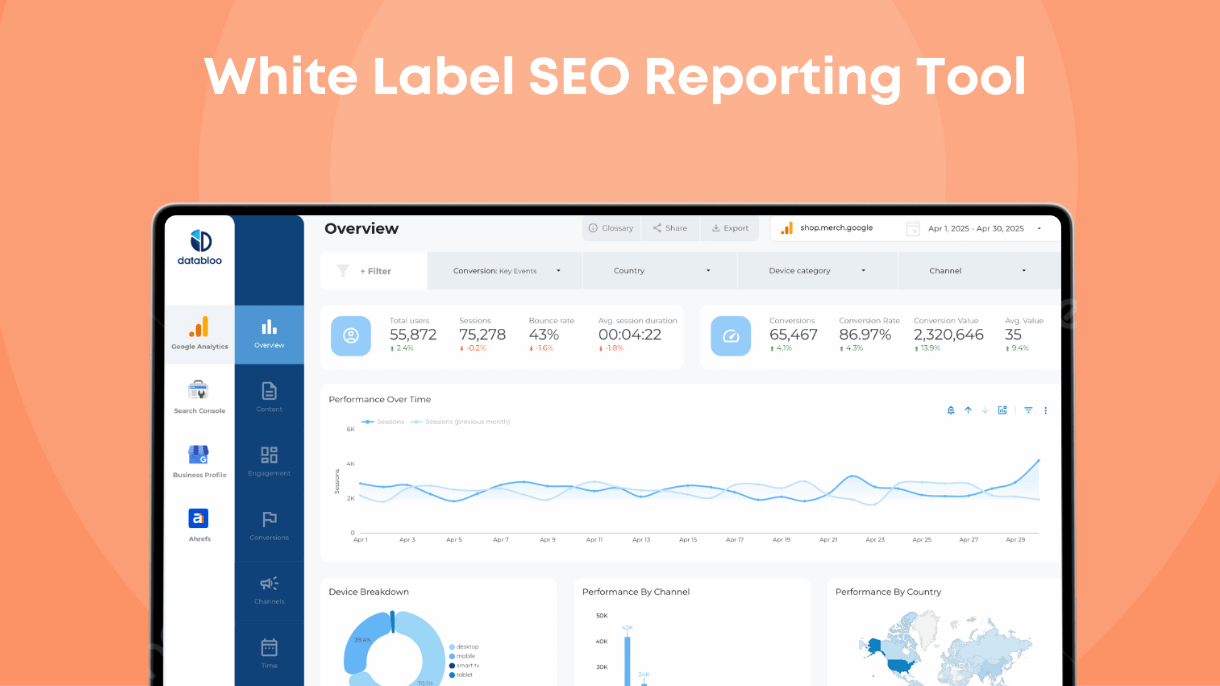
The right reporting tool makes the difference between spending three hours per client per month on reports and spending twenty minutes. There are several strong options in the market, each with different strengths depending on your agency’s size, client base, and budget.
AgencyAnalytics is one of the most widely used white label reporting platforms in the agency space. It connects directly to Google Search Console, GA4, Ahrefs, SEMrush, and dozens of other data sources, and generates fully branded reports with your logo, colors, and domain. You can build custom dashboards for each client and automate monthly report delivery. Pricing starts at around $12 per client per month, which is easily absorbed into your retainer margin.
SEMrush’s My Reports feature offers a solid white label SEO reporting option for agencies already paying for SEMrush subscriptions. You can build templated reports, add your branding, and schedule automated delivery. The limitation is that it pulls primarily from SEMrush data, so if you want to integrate GA4 or Google Search Console alongside it, you’ll need to do some manual work.
Google Looker Studio (formerly Google Data Studio) is free and extremely flexible. It connects to Google Search Console, GA4, and dozens of third-party connectors, and you can build fully branded, pixel-perfect reports that update automatically. The learning curve is steeper than AgencyAnalytics, but for agencies willing to invest the setup time, it produces the most professional and customizable output available at no additional cost.
DashThis and Whatagraph are both strong alternatives for White Label SEO Reporting agencies that want beautiful automated reports with minimal configuration. Both offer white label branding and connect to a wide range of data sources. Whatagraph in particular has built a reputation for visually impressive reports that clients find genuinely easy to understand.
Whichever tool you choose, the key is consistency. Every client report should follow the same structure so your team can produce them efficiently and clients know what to expect each month. Template your report format once, then replicate it across your entire client base with client-specific data swapped in.
How to Customize Reports for Different Client Types
A one-size-fits-all report rarely fits anyone well. A local restaurant owner needs very different information from an e-commerce brand selling nationally, and both need something different from a B2B software company measuring organic lead generation.
For local SEO clients, the report should prioritize Google Business Profile performance data, including search impressions, direction requests, and call clicks alongside organic traffic and local keyword rankings. Map pack visibility for key local terms is critical context, and citation growth or review acquisition metrics add relevance if those services are part of the engagement. Our white label local SEO services include reporting outputs specifically formatted for local clients, which simplifies the customization process considerably.
For e-commerce clients, organic revenue and transactions from GA4 should anchor the report. Keyword rankings matter, but they should be secondary to whether organic traffic is converting. Product page performance, category page rankings, and organic revenue trends by month give e-commerce clients the business-level view they’re actually interested in.
For B2B clients with longer sales cycles, organic lead generation is the key metric, and that means tracking form fills, phone calls, and demo requests attributed to organic traffic in GA4. Keyword rankings in this context should focus on commercial and transactional intent terms rather than broad informational traffic that doesn’t convert.
The customization doesn’t need to be complex. It mainly means choosing which KPI blocks appear at the top of the report and which data sources are prioritized. A well-structured template with modular sections lets you adapt reports for different client types without rebuilding from scratch each time.
Client Communication Strategies That Make Reports Land
Sending a report isn’t the same as communicating results. The most common mistake agencies make is emailing a PDF and waiting to hear back. That passive approach puts the client in the position of interpreting data they didn’t generate, in a field they may not fully understand, without guidance. The result is often silence, followed by questions, followed by doubt.
The most effective agencies treat the monthly report as a starting point for a conversation, not the conversation itself. Send the report with a short written summary, three to five sentences that highlight the key wins, acknowledge any challenges, and outline what’s planned for the next month. This framing does three things: it demonstrates that a real person is paying attention, it preempts the questions clients are most likely to ask, and it creates a natural bridge to the next period of work.
For higher-value retainer clients, a monthly 30-minute review call adds significant perceived value without much time investment. Walk through the report together, explain what the data means in plain language, and use the call to surface any new information about the client’s business that might affect the SEO strategy. These calls are also your best opportunity to identify upsell needs, because clients who feel informed and heard are far more likely to expand their engagement than those who simply receive reports in silence.
When results are underperforming, communication is even more critical. Don’t wait for the client to notice. Proactively address any negative trends in your report summary, explain the cause where you can identify it, and present a clear plan for addressing it. Clients who feel kept in the loop during difficult periods are far more forgiving than those who feel like bad news was hidden from them. Transparency in challenging months is what builds long-term trust, and long-term trust is what keeps clients renewing month after month.
Frequently Asked Questions
What should be included in a white label SEO reporting?
A strong white label SEO reporting should include organic traffic trends, keyword ranking movement, new backlinks acquired, Core Web Vitals performance, and conversion data from organic traffic where tracking is in place. Each metric should include historical comparison data so progress is visible, not just a snapshot. The report should be branded with your agency’s logo and colors, with no reference to the underlying tools or fulfillment partners used to produce the data.
How often should I send SEO reports to clients?
Monthly is the standard for most SEO retainers and strikes the right balance between frequency and meaningful data accumulation. Weekly reports can create noise because SEO moves slowly, and minor fluctuations over seven days rarely tell a useful story. Quarterly summary reports are a valuable addition for longer-term clients, showing cumulative progress over three to six months in a format that’s easy to share internally with their stakeholders.
Which tool is best for white label SEO reporting?
AgencyAnalytics is the most popular choice for agencies that want an all-in-one branded reporting platform with minimal setup time. Google Looker Studio is the best free option for agencies comfortable with a higher initial setup investment. For agencies already using SEMrush, the built-in My Reports feature is a practical starting point. The right tool depends on your client volume, budget, and how much customization you need.
How do I brand a white label SEO report as my own?
Most dedicated reporting tools like AgencyAnalytics, DashThis, and Whatagraph allow you to add your agency’s logo, brand colors, and custom domain so reports appear entirely as your own product. Google Looker Studio reports can be similarly customized. The key is ensuring no platform watermarks, default tool names, or third-party branding appear anywhere in the client-facing output.
What metrics matter most to SEO clients?
Most clients care primarily about traffic growth, keyword rankings for terms they recognize as important to their business, and whether organic traffic is generating leads or sales. Technical metrics like Core Web Vitals and crawl health matter to you as the practitioner, but should be included in reports with plain-language explanations rather than raw data that requires SEO knowledge to interpret. Always lead with business impact, not technical detail.
How do I explain SEO results when rankings have dropped?
Be direct and proactive. Acknowledge the drop in your report summary, explain the most likely cause, whether that’s a Google algorithm update, increased competitor activity, or a technical issue, and present a specific action plan for recovery. Clients can handle bad news when it comes with context and a clear response plan. What damages trust is discovering problems themselves without any communication from you.
Can I automate white label SEO reporting?
Yes, and you should. Tools like AgencyAnalytics, Whatagraph, and DashThis all support automated monthly report generation and scheduled email delivery. Set up your branded template once, connect your data sources, and the tool handles production automatically. Automation doesn’t mean hands-off: you should still review each report before it goes out and add a personalized written summary that addresses that specific client’s results.
Key Takeaways
- White label SEO reporting is a retention tool as much as it is a communication tool. Professional, branded reports signal premium service and build client confidence month after month.
- Focus on five core KPIs: organic traffic, keyword rankings with trend data, backlink acquisition, Core Web Vitals, and conversion data. Everything else is secondary.
- Choose a reporting tool that matches your agency’s scale and budget. AgencyAnalytics suits most growing agencies. Google Looker Studio is the best free option for agencies willing to invest in setup.
- Customize reports by client type: local clients need GBP data, e-commerce clients need revenue metrics, and B2B clients need lead generation data front and center.
- Pair every report with a written summary and, for higher-value clients, a monthly review call. Communication transforms data into trust.
If you want to see how a properly structured white label reporting setup integrates with a full-service fulfillment partnership, get in touch with the 7thClub team and we’ll show you exactly how our reporting process works from the inside.